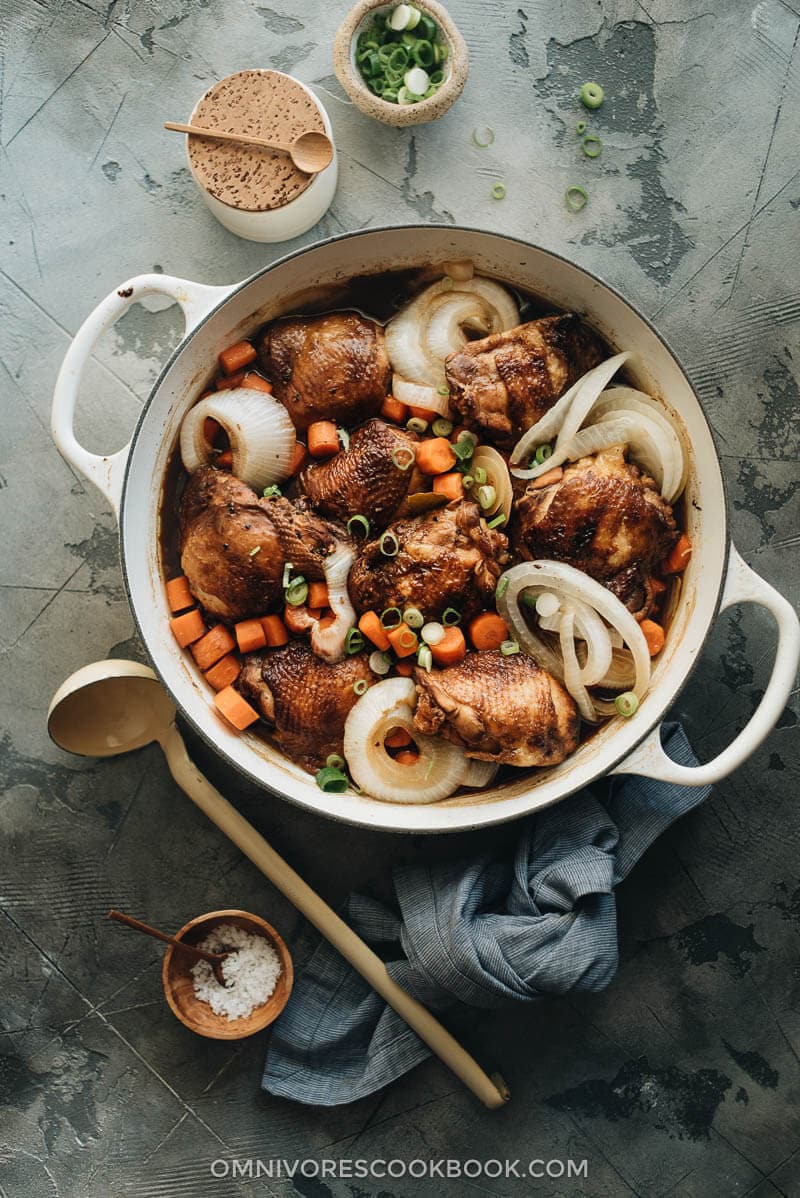
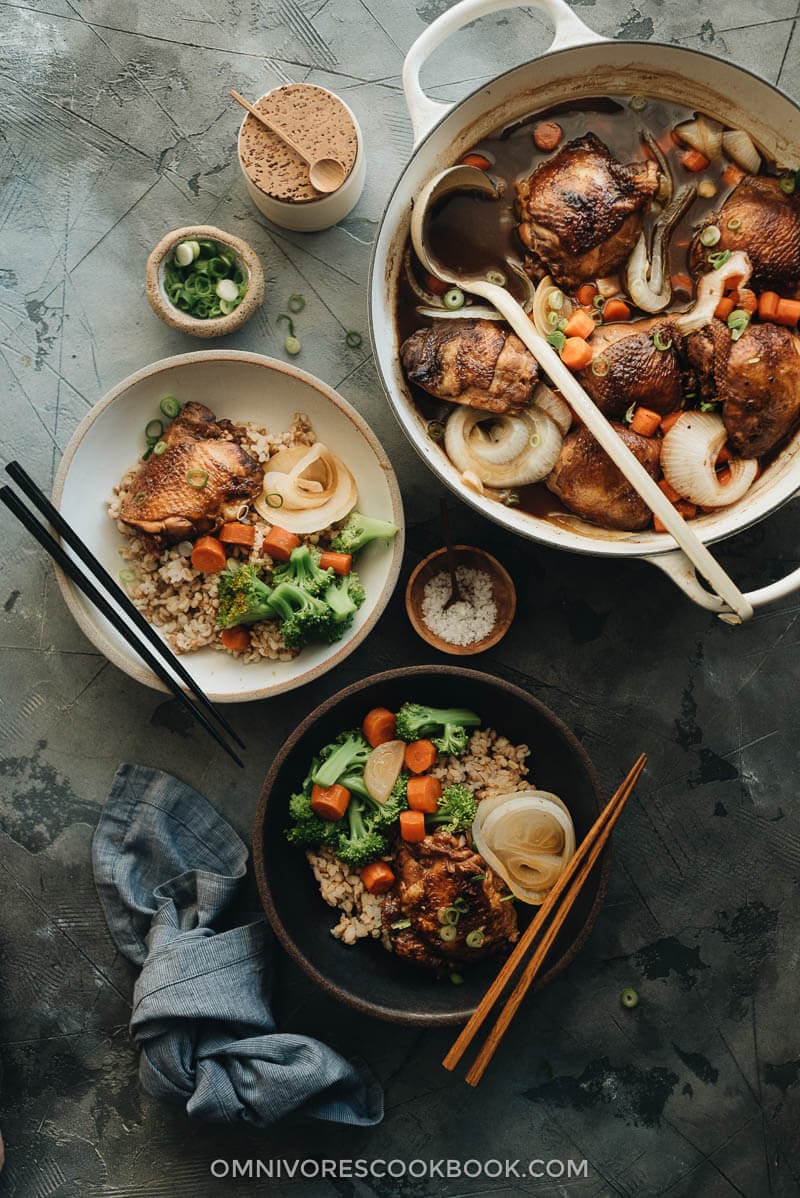
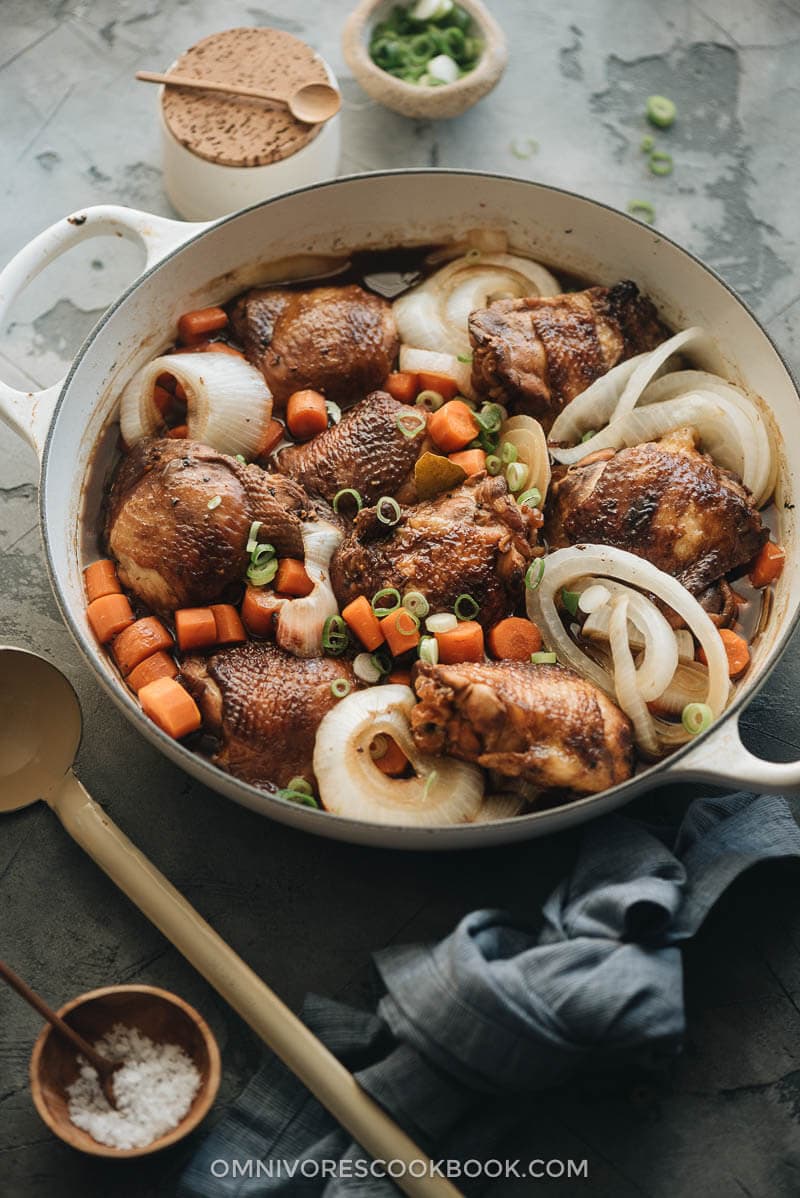
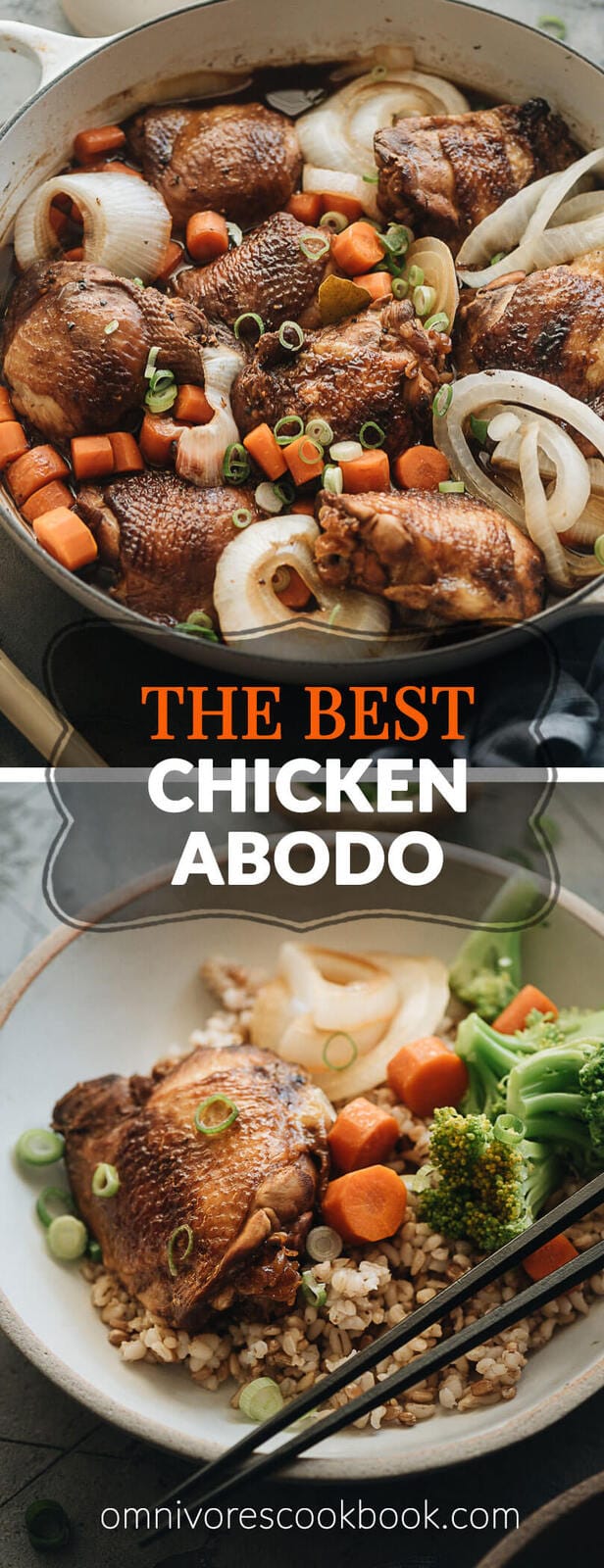
Filipino cuisine has been sweeping the culinary world by storm. I love trying out different flavors and when I got The Filipino Cookbook by my Miki Garcia, I couldn’t wait to try it out. The cuisine is bright and friendly just like Filipino culture, and I loved that this book makes it easy for anyone to create Filipino dishes even if they’ve never tried this type of cuisine before. It always feels a bit mystifying when stepping into a new cuisine, and this cookbook does a fantastic job of keeping you assured and confident in the kitchen. I decided to try the chicken adobo first because I was fascinated with the technique. In warmer climate, it’s very common to find methods of preserving food. Vinegar is an excellent way to keep bacteria away which is why Filipino natives turned to this method of marinating to keep meats from spoiling. Chicken adobo is also one of the most popular dishes in the Philippines. Luckily, we don’t need our passports to get an authentic taste of the flavors today!
Traditionally, chicken adobo (as well as other types of adobo) were cooked in clay pots, but you can use cast iron, enameled cast iron, or stainless-steel pans instead. Whatever you do, don’t use aluminum because the vinegar reacts chemically with it and it changes the taste. Along with vinegar, the marinade recipe includes soy sauce, bay leaves, garlic, black peppercorns, onion, and brown sugar. It’s important to note though that the type of vinegar makes a difference. You should try to find Filipino cane vinegar to completely match the authentic flavor. If you’re not able to find it at your local Oriental market, you can use white vinegar or cider vinegar, but you must dilute them with water. To match the cup of vinegar, you’ll need to add 2 cups of water.
Marinating it is the key to matching the true taste of this dish. Simply preparing the marinade and allowing the chicken to absorb all the flavors of the ingredients mingling together is really all it takes to get real chicken adobo in your kitchen. At the end, I love to add a handful of vegetables to make the dish more colorful. Serving it over a bed of fluffy white rice is highly recommended to get the most of this delightfully delicious and tangy sauce. Once you perfect this technique for making chicken adobo, you can try it with other meats like pork, beef, or even seafood!
More delicious braising recipes
Easy Chicken Curry Braised Pork Ribs Chicken Potato Stew with Noodles Pork Belly Buns Vegetarian Lentils Stew Palak Paneer
If you give this recipe a try, let us know! Leave a comment, rate it (once you’ve tried it), and take a picture and tag it @omnivorescookbook on Instagram! I’d love to see what you come up with.