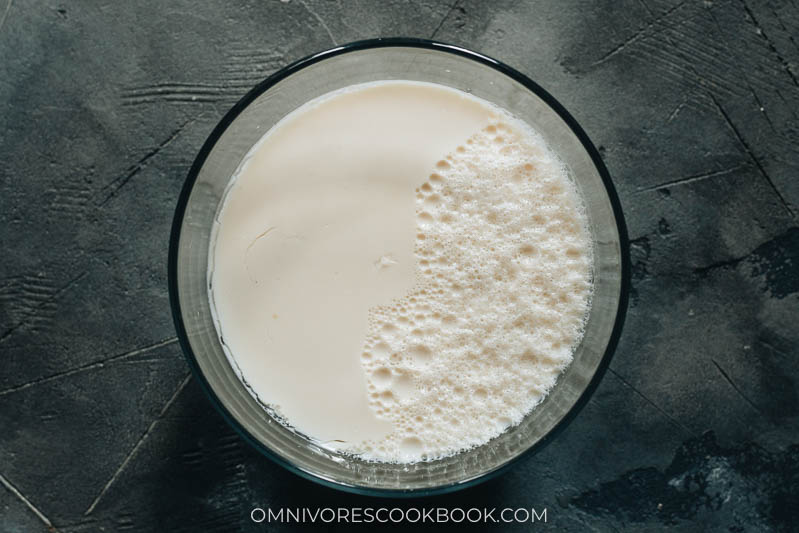
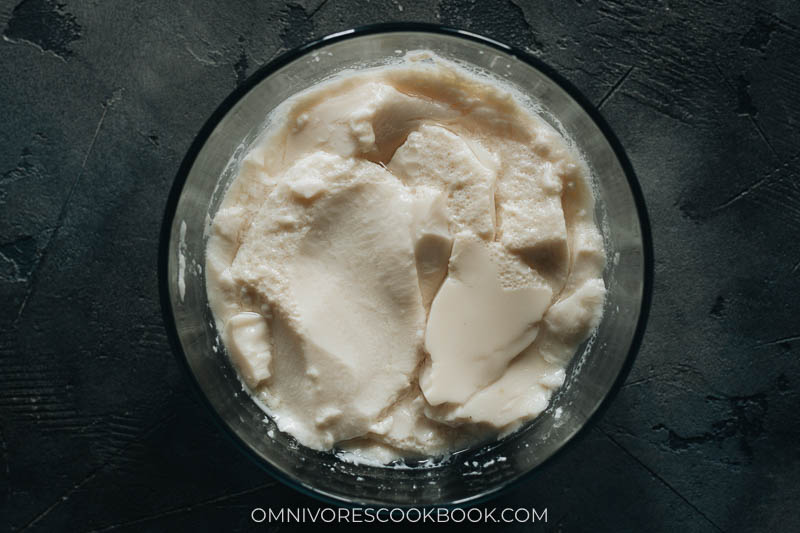
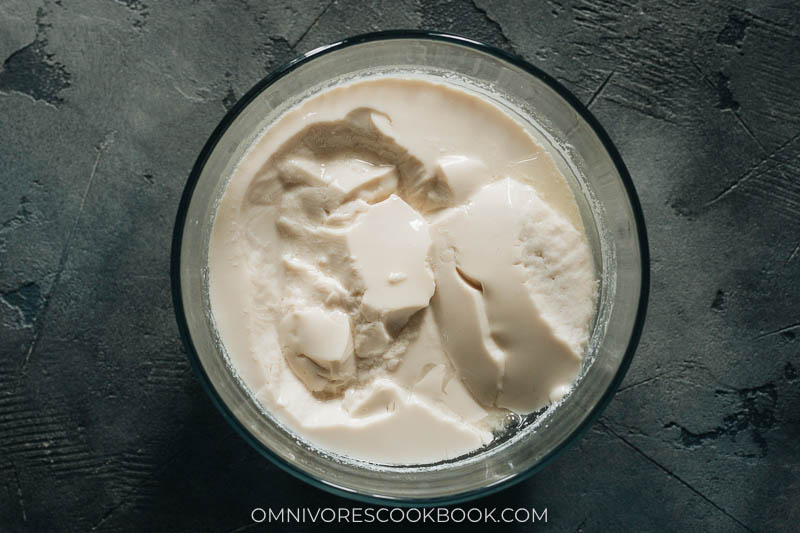
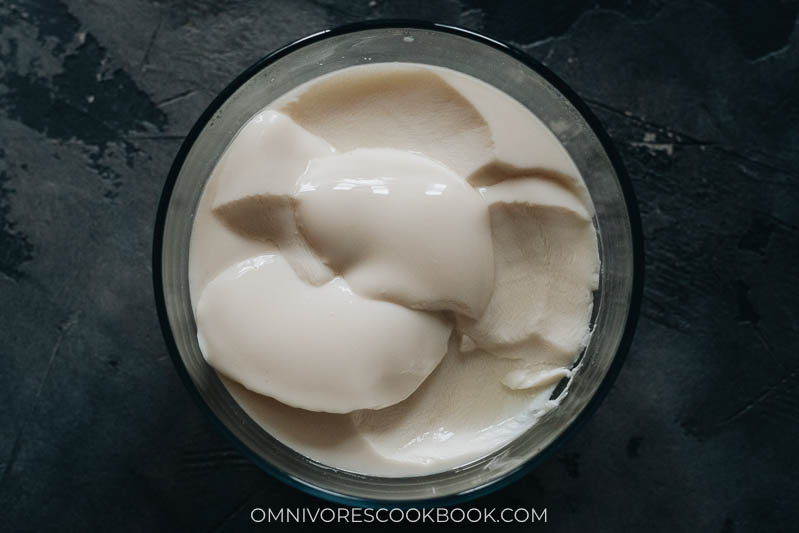
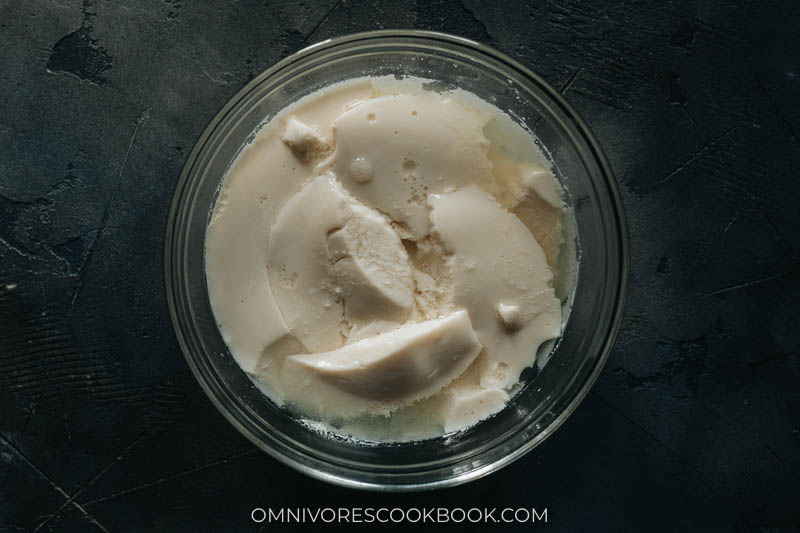
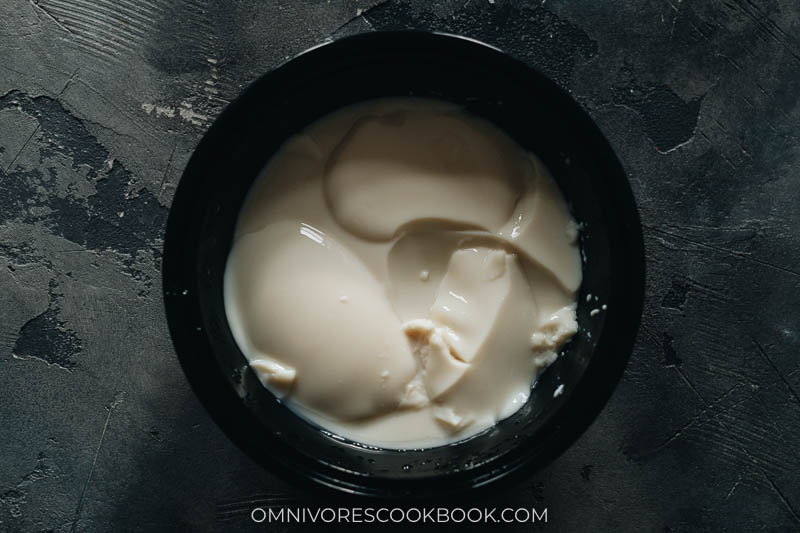
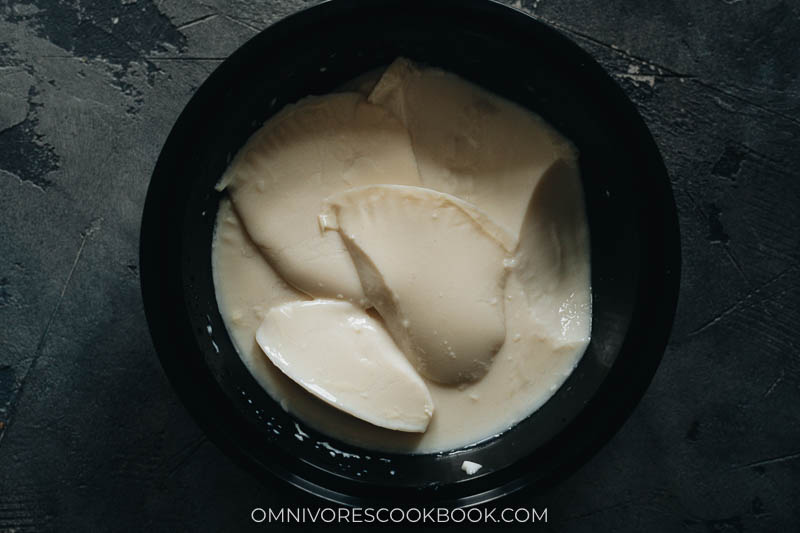
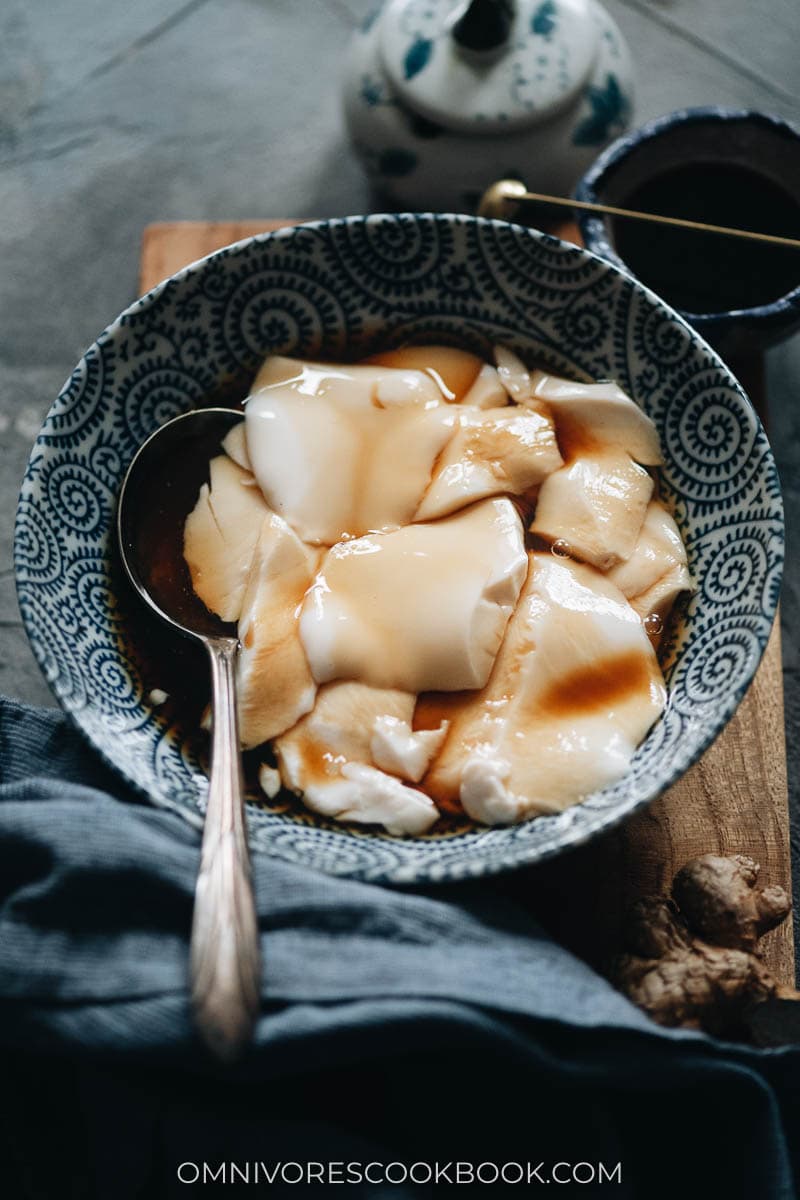
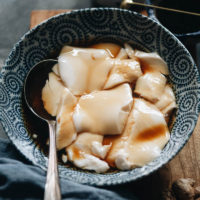
What is douhua / tofu pudding
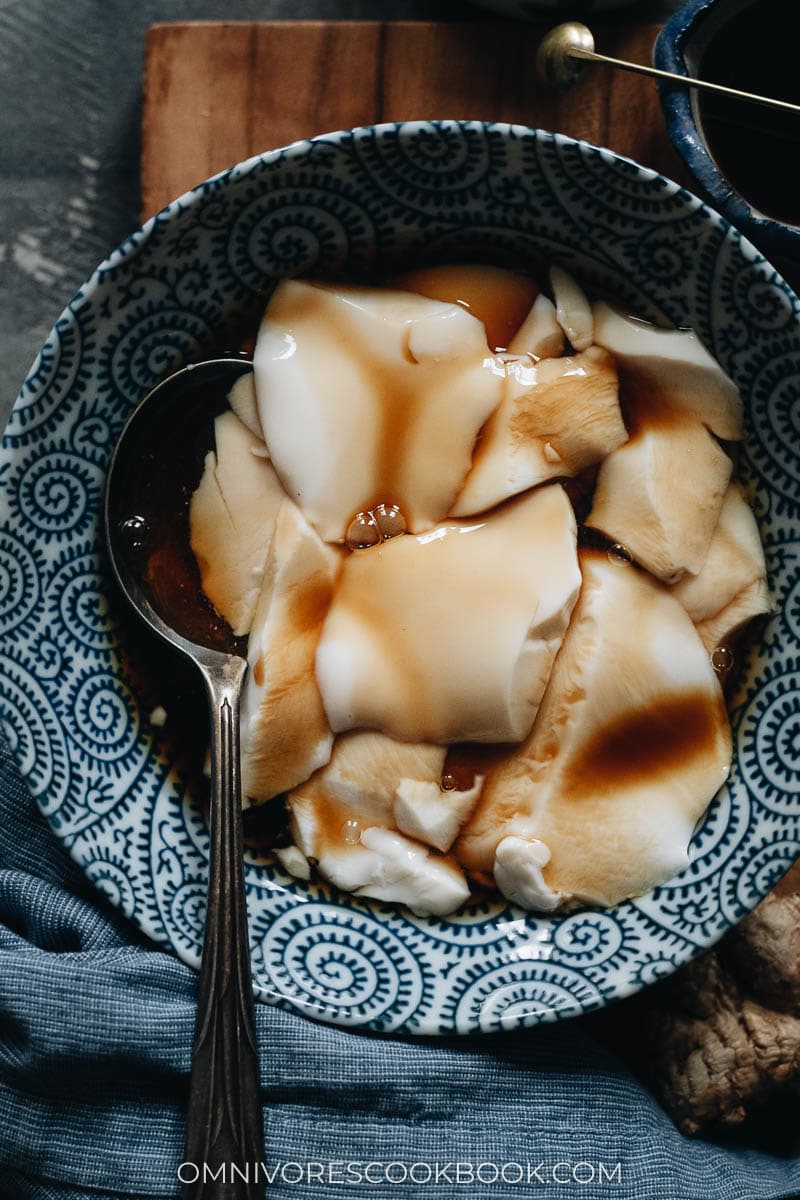
Douhua, or tofu pudding, is a type of fresh, extra-soft, uncurdled tofu that is even softer than silken tofu. It is so soft that it’s often served with a ladle. In northern China, we call it Dou Fu Nao (directly translated, means “tofu brain”) and we serve it with a savory gravy. In southern China, people usually call it douhua and serve it with a gingery syrup. While traveling to central and western China, I’ve had the dish served with various savory sauces (usually soy sauce based) with fresh aromatics, pickles, and chili oil. Douhua is made with soy milk and a coagulant to help it congeal. Different from making tofu, where you use a coagulant to make the soy milk curdle and then press it, making douhua is a simpler process. You simply need to dissolve the coagulant into the soy milk and let it set. That’s all.
Different coagulants for making tofu pudding
In order to find the best way to make douhua, my teammate Lilja and I decided to test out all the common coagulants and find out the best approach. We tested:
GDLGypsumNigariGelatinAgar AgarCitrus
The results
Long story short, we found out that the GDL produces the best and most consistent result. But it’s trickier when made in small batches because it requires a precise (to the tenth of a gram) scale to get a good result. The gypsum method produces the second best result and it’s easier to make at home. Plus, since it’s also a coagulant used to make regular tofu, we picked it as another winner. Even if you accidentally curdle the soy milk while making douhua, you can still press it into tofu. So there is no waste. The nigari and citrus methods didn’t work out. Both led to curdled tofu after many tests so we had to forego these methods. Gelatin and Agar both make OK results, but they produce a bouncy jelly-like texture that I find a bit weird. (PS. My husband Thomas loved it (lol), though, I think if you didn’t grow up eating this dish you might like the result) You can jump to the recipe below if you want to use the gypsum method. I also included all the methods in the blog post below, in case you want to use a different coagulant.
Homemade soy milk VS. store-bought
They both work! Homemade soy milk has a thicker texture so it requires less coagulant and the result tastes slightly better. However, we understand that you might not want to make soy milk from scratch every time you make douhua. We tested the store-bought soy milk as well and the result turned out totally OK. The only thing to note is that you need to make sure the store-bought soy milk contains only soybeans and water. I’ve only seen this kind at Chinese markets, other Asian markets, and Trader Joe’s (the Trader Joe’s brand soy milk). The additives in packaged soy milk might affect the coagulation process and won’t produce a great result. I have included the amount of adjusted coagulant measurements below, using store-bought soy milk. The only thing we didn’t test is homemade soy milk made with a soy milk machine. Because I had to get rid of my soymilk maker when moving to New York due to my limited space. Based on my previous experience, the soy milk made with the machine is slightly thinner than the version without, so you should use the measurements for the store-bought soy milk.
The methods of making douhua
There are two ways of making douhua – the steaming method and the pouring method. For the cooking part, we tested both steaming and pouring.
The steaming method (recommended)
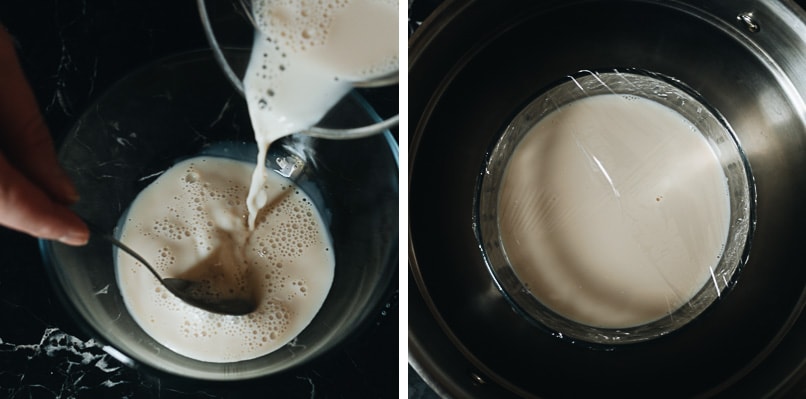
To use the steaming method, you will have to use a soy milk that is cold or at room temperature. The cooking requires a heat-proof bowl and a steamer. You will need to: We highly recommend the steaming method because it is reliable and always produces consistent results.
The pouring method
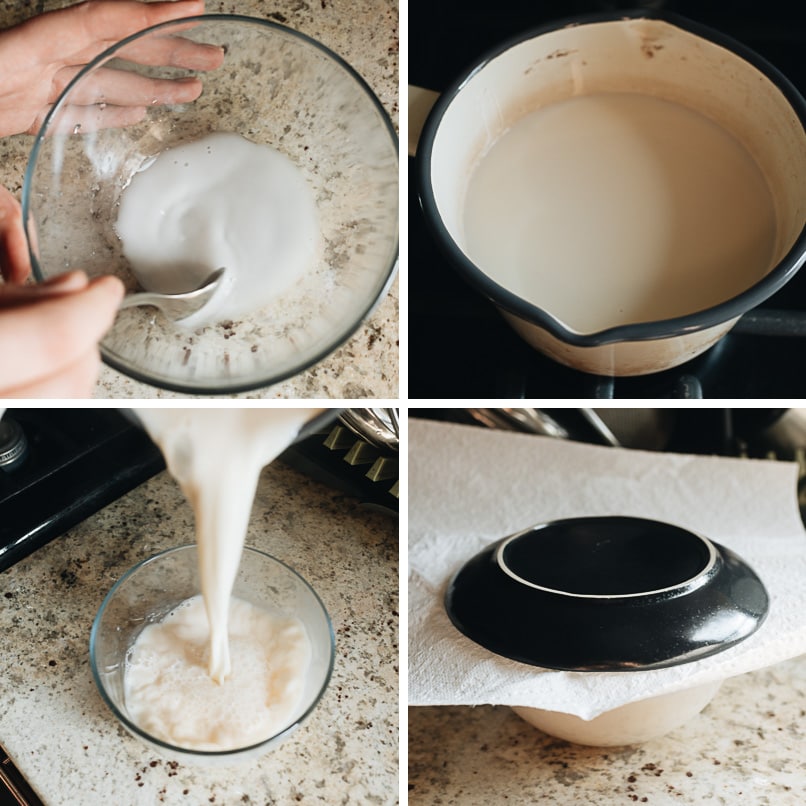
The pouring method is quite popular because it’s convenient when you’re making a fresh batch of soy milk and using the hot milk to make douhua immediately. You will need to: We do not recommend the pouring method because: However, if you prefer to use GDL as the coagulant, it’s totally OK to use the pouring method and the result will be very consistent.
The recipes for making Douhua using different coagulants
I’m including all the recipes to make douhua using different coagulants. You will also find the gypsum method at the end of the post in the recipe card with a gingery syrup recipe. I included only that one in the recipe card because it’s my favorite.
Making douhua using gypsum (recommended)
Gypsum is a soft sulfate mineral which is a main ingredient in plaster and drywall. It’s commonly used in China to make tofu and douhua the traditional way. We love the gypsum method because it produces a very smooth texture and the result is quite consistent even if you do not use a scale. The downside is, you will need to use the steaming method for gypsum since the pouring method curdles a lot and the texture is bad even when the soy milk doesn’t curdle.
Making douhua using GDL (recommended)
GLD, or Glucono Delta Lactone, is a food additive as an acidifier (also commonly used in making feta cheese). INGREDIENTS
400 ml (1 2/3 cup) homemade soy milk (or store-bought soy milk), cold or room temperature (*Footnote 1)2 g (1/2 teaspoon) gypsum (*Footnote 2)(Optional) Pinch of salt and/or sugar (*Footnote 3)
INSTRUCTIONS
- If using store-bought milk, it should contain only soy milk and water.
- Since store-bought soy milk is thinner, you will need to increase the amount of gypsum to 3/4 teaspoon (3.5 g).
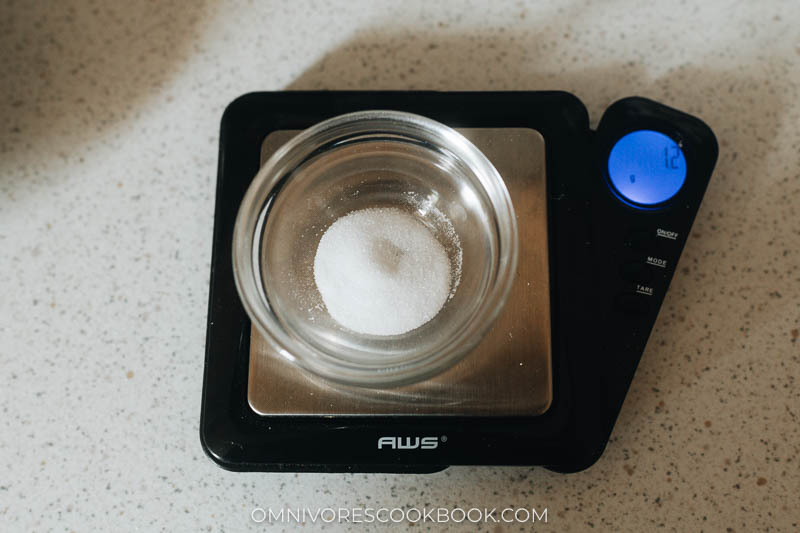
- The added salt/sugar will mask the mild taste of the gypsum if you eat the tofu curd plain. But since you will usually be serving it with a sweet or savory sauce, or use the curd in other recipes like a soup, I don’t see the need to add the sugar/salt, so I usually don’t. Compared to the traditional gypsum, GDL is popular these days, especially in restaurants. When making douhua, it produces a smoother, more silky texture, and the result is always consistent. As a general rule: (Grams of soymilk) x .0025 = Grams of GDL As long as you follow the rule, you will always get the same smooth and soft texture. The only downside is, it’s hard to measure GDL if you’re making douhua in small batches. For example, you will need 1 gram GDL for 400 ml soy milk that yields two servings. To measure 1 gram, you will need a special scale that is precise to 0.1 gram. During the testing, we tried using the spoon measurement. Unfortunately, a 1/4 teaspoon GDL yields anywhere from 0.7 grams to 1.2 grams, producing a result that is either too soft or too firm. Our conclusion is that, if you really love douhua and plan to use the pouring method, you should get a scale and use the GDL method.
Making douhua using Gelatin
Gelatin is a translucent flavorless powder made from collagen taken from animal parts. So you should avoid this method if you’re vegetarian or vegan. INGREDIENTS Steaming method
400 ml (1 2/3 cup) homemade soy milk (or store-bought soy milk), room temperature1 g GDL (1/4 t) (*Footnote 1)(Optional) A pinch of salt and/or sugar (*Footnote 2)
Pouring method
1 g cornstarch (1/4 t) (*Footnote 1)1 tablespoon water
INSTRUCTIONS Steaming method Pouring method FOOTNOTE 1- I highly recommend using a precise scale for GDL because the teaspoon measurement is not accurate at all. If using store bought soy milk, use 1.5 g (a heaping 1/4 tsp or 3/8 tsp) GDL. 2- The douhua will have a bit acidic aftertaste without using any sugar or salt. But if you serve it with a sauce, the aftertaste is not noticeable. Although it looks soft and smooth on the picture, I personally do not like this method because it produces a Jello-like texture that is slightly bouncy and sticky. It also only produces cold douhua due to the cooking method. But gelatin is an ingredient that is easy to find and you can usually get it at a regular grocery store.
Making douhua using Agar Agar
Agar Agar (or agar) is a jelly-like substance made from red algae, a type of seaweed. It’s a common ingredient in Japanese cuisine and a popular one to replace gelatin to make vegan desserts. INGREDIENTS
325 ml (1 1/3 cup + 1 teaspoon) homemade soy milk (or store-bought soy milk), cold or room temperature1 teaspoon gelatin
INSTRUCTIONS But similar to gelatin, it creates a texture that is jelly-like with a slightly stiff mouthfeel. The method also only produces cold/room temperature douhua. I do not recommend this method if you’re looking for a very authentic douhua texture.
How to serve douhua
Douhua can be served hot or cold. In the recipe below, I’ve included the popular ginger syrup to serve the dish as a dessert. INGREDIENTS
325 ml (1 1/3 cup + 1 teaspoon) homemade soy milk (or store-bought soy milk), cold or room temperature1/2 teaspoon agar agar
INSTRUCTIONS Growing up in Beijing, I’ve always eaten savory douhua. The sauce is made with minced pork and other dried ingredients in a brown gravy. It’s usually served as a breakfast along with Chinese donuts (You Tiao). I will share the recipe with you soon!
Keys to making the perfect douhua
Choose either gypsum or GDL as a coagulant if you plan to make douhua more than once. It’s definitely worth the trouble to order it online. No matter which coagulant you’re working with, the measurement will vary slightly depending on the soy milk you use. My measurements are based on my homemade soy milk (without a soy milk machine), using 8 oz (226) dried soy beans to yield about 6 cups (up to 6 1/2 cups) of soy milk. If you’re using a different soy milk formula, the measurement of the coagulant might change slightly because your soy milk might have a different thickness. But if you keep making douhua with one type of soy milk, you can slightly tweak the coagulant amount to achieve the perfect texture. I also highly recommend getting a kitchen scale no matter which method you use. In general, the gypsum method is quite forgiving and you can get away without a scale. But if you want the perfect result every time, you should use a precise scale with GDL.
Afterthoughts
Making douhua might sound intimidating at first. But once you understand the method and get the proper measurements, it’s actually very easy to make at home. No matter whether you’re trying to recreate your childhood memories or searching for a new way to enjoy tofu, this is a perfect recipe for you. Want to learn more about Chinese Cooking? Sign up for my newsletter to receive the 5-Day Chinese Cooking Crash Course and recipe update!
Other recipes you might be interested in
Easy Hand-Pulled NoodlesHow to Make Chinese Dumplings from ScratchHow to Make Steamed Bao Buns (Gua Bao Buns)Gua Bao (Taiwanese Pork Belly Buns, 割包)Wonton Soup
Lilja Walter is a part of the Omnivore’s Cookbook team and worked closely with Maggie to develop and test this recipe.