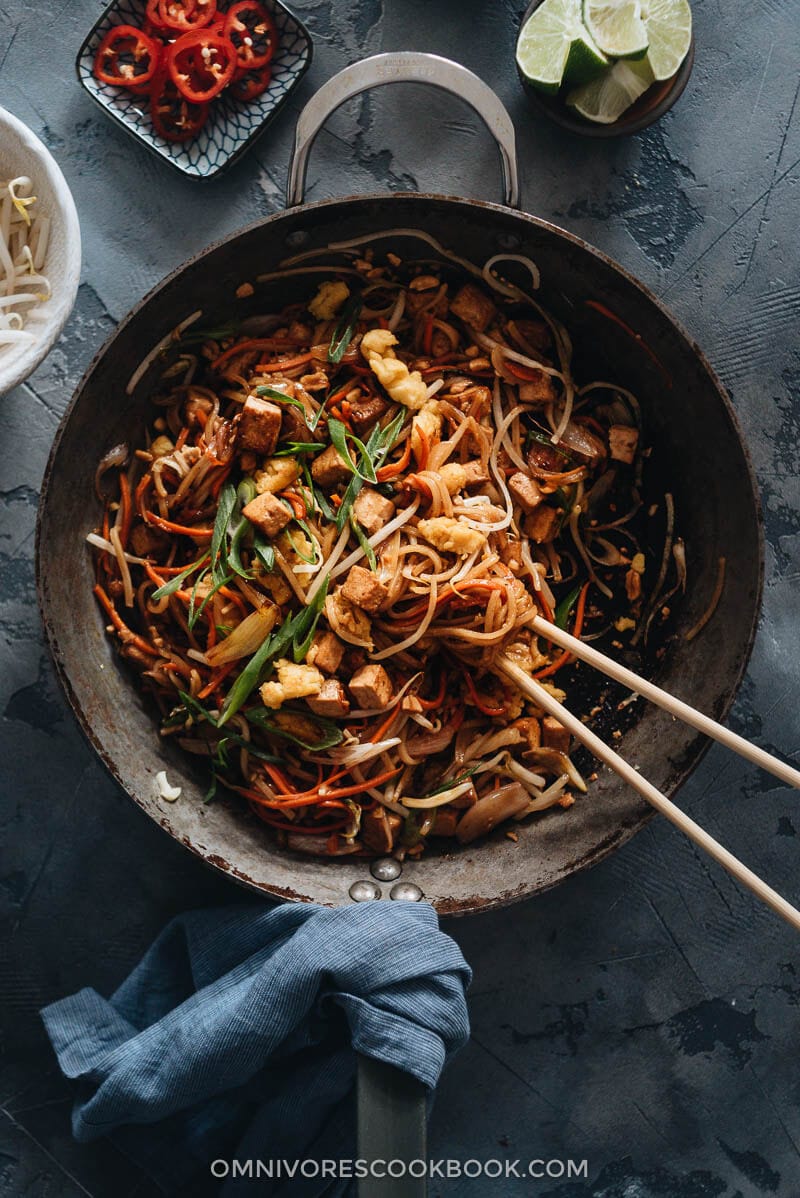
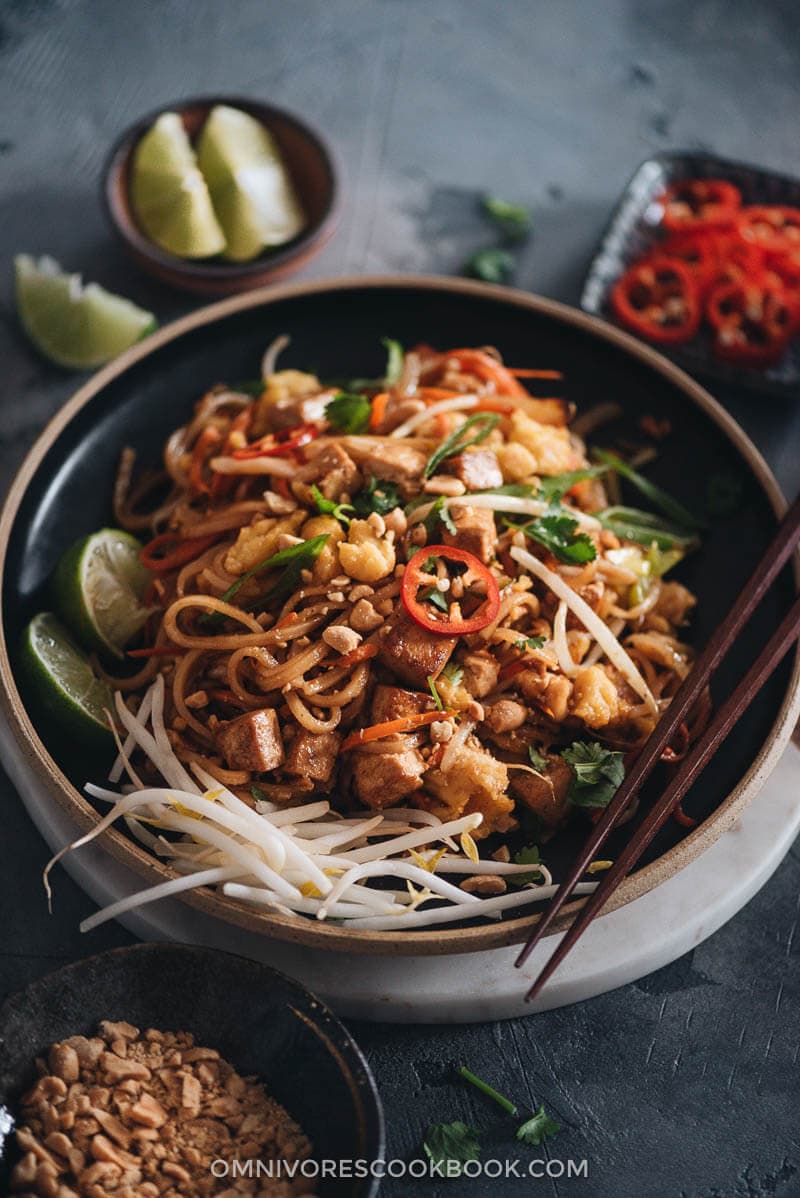
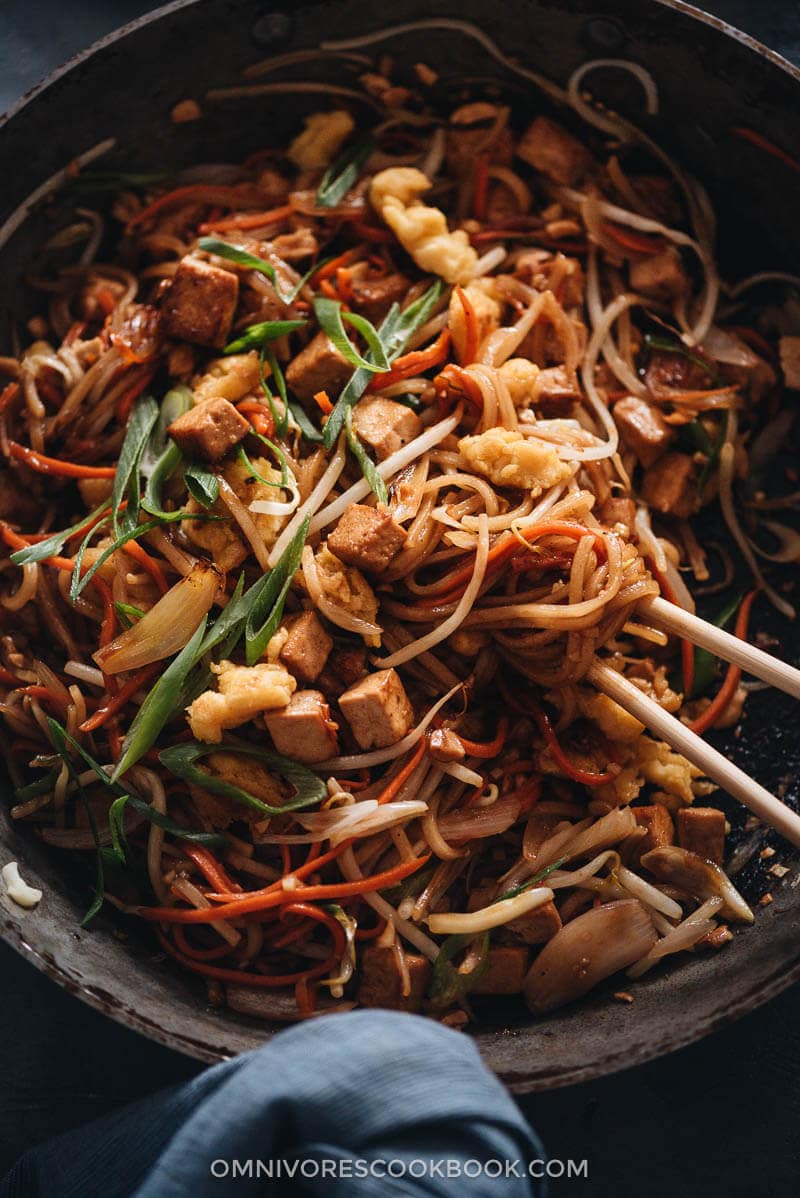
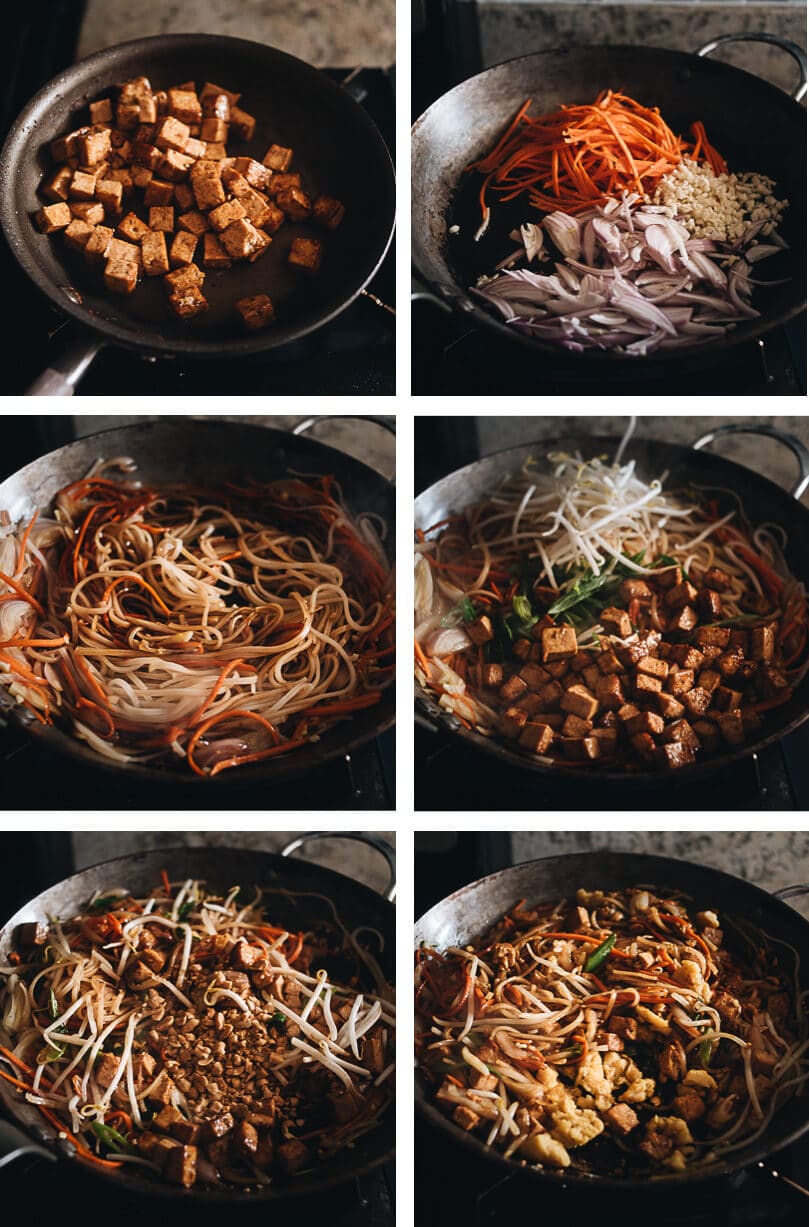
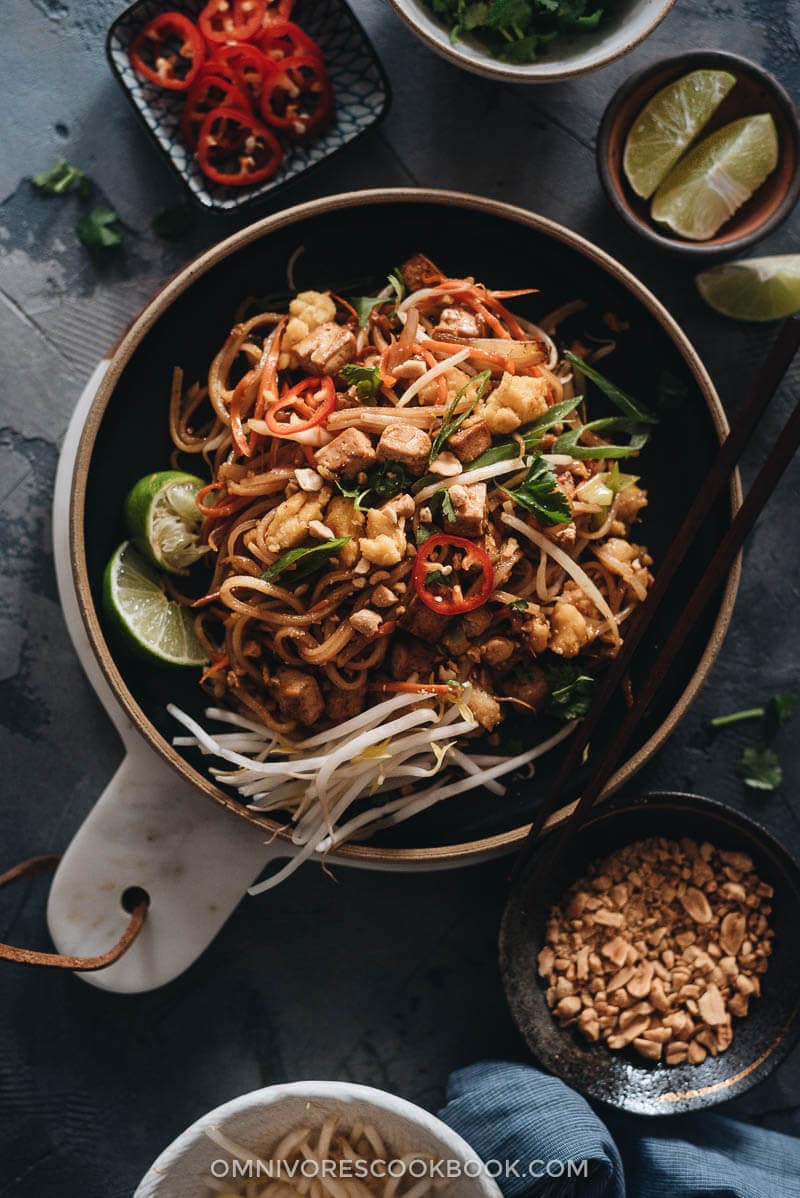
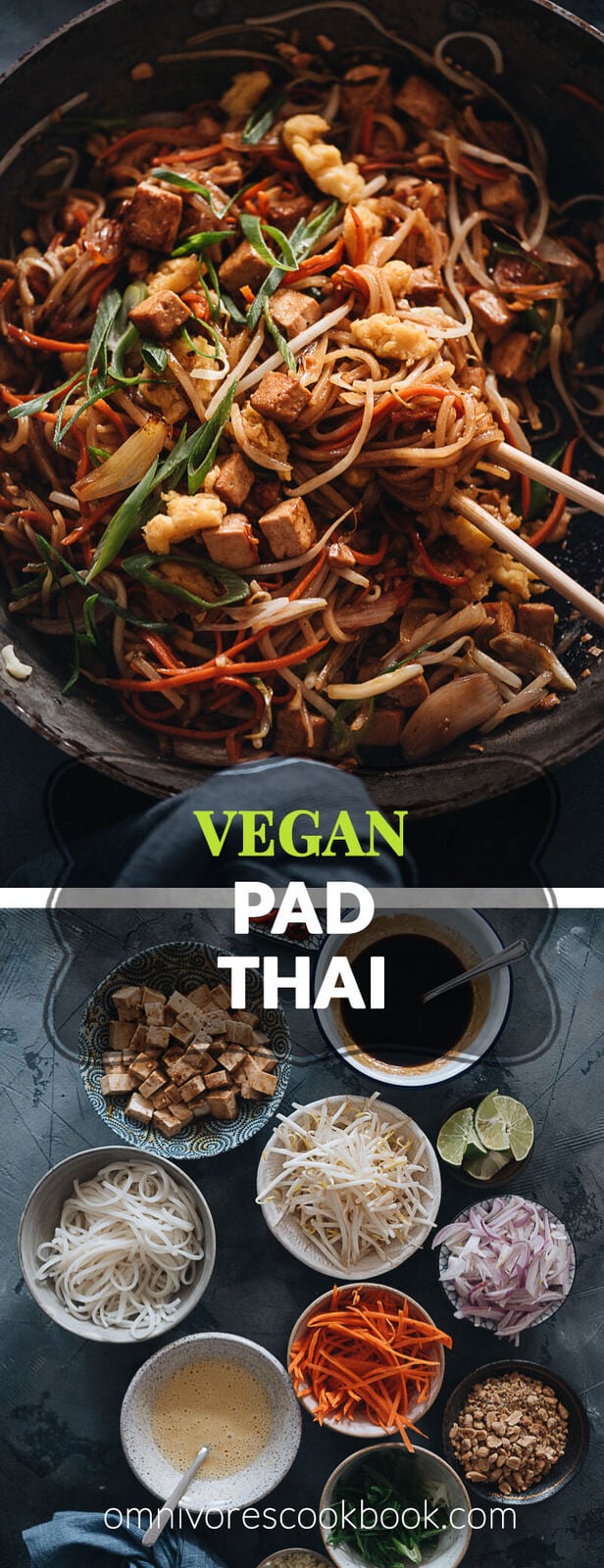
After my husband started his vegan blog Gastroplant, I naturally started to cook more vegan dishes. I noticed that when I stay vegetarian and vegan, my body feels less heavy during the day and I can eat as much as I want and not worry about weight gain. So here it is, the vegan Pad Thai recipe. I really love this recipe because it reminds me of the Pad Thai I had in Thailand. It has plenty of veggies and texture. And the sauce is super rich and bursting with flavor. Even though it lacks prawns, I replaced them with marinated tofu, which produces a great result. I even threw in a vegan egg made from chickpea flour, just for fun. OK, now this recipe might look quite long and complicated. But I promise, it is quite straightforward if you just follow the steps. And you’ll find the result so rewarding.
Why this recipe
In the past, I usually included a few short recipe notes on how to convert a regular dish into a vegan one. After I learned about and ate more vegan and vegetarian dishes, I found that simply replacing the protein with tofu or adding shiitake mushrooms to boost the flavor simply won’t cut it. A vegan version usually requires a bit more attention to create an equally delicious taste. Here is my approach for the vegan Pad Thai.
1. More aromatics
This recipe doubles the amount of aromatics used in a non-vegan version. The meat, fish sauce, and the eggs in a standard Pad Thai add a lot of umami and depth to the dish. I found that I usually need to add a bit more herbs – in this case, shallots, garlic, and green onion – to make the vegan version stand out.
2. Marinating the tofu makes a difference
A typical Pad Thai usually contains a bit of tofu and the tofu does not require marinating. However, since we’re also using tofu to replace the meat / seafood in the dish, the extra process makes a difference. When I mix the sauce, I simply make a bit more and use the same sauce to marinate the tofu. When cooking the tofu, I also pour the marinade into the pan to cook with the tofu. It ends up creating very flavorful protein bites that taste great by themselves.
3. Fish sauce alternative
I’ve seen some recipes use soy sauce to replace the fish sauce. I’ve tried it at home, but always felt something was lacking. So I decided to use an ingredient from Chinese cooking – vegetarian oyster sauce. If you have some extra time and would like to create a healthier dish, homemade vegetarian oyster sauce is always a great option. Alternatively, the bottled one will work just as well. Vegetarian oyster sauce contains concentrated mushroom extract and adds more dimension to the sauce than soy sauce.
Cooking notes
1. A quick introduction to tamarind paste
Tamarind paste is made from the tamarind fruit. The fruit has the shape of a pea pod and a dark color. The fruit is sticky and has a sour citrusy taste. It does have notes of smoke and caramel as well, which make the flavor more complex than vinegar. Tamarind paste is a key ingredient in Thai dishes, such as Pad Thai. I consider its importance equivalent to that of Chinking vinegar in Chinese cooking. Combined with soy sauce and cane sugar, tamarind paste creates a rich sweet and sour taste that makes authentic tasting Pad Thai. I do know that you might create a similar flavor profile by combining ketchup with rice vinegar (some takeout places use the same method). But this recipe calls for tamarind paste, to create a Pad Thai that’s true to the original version.
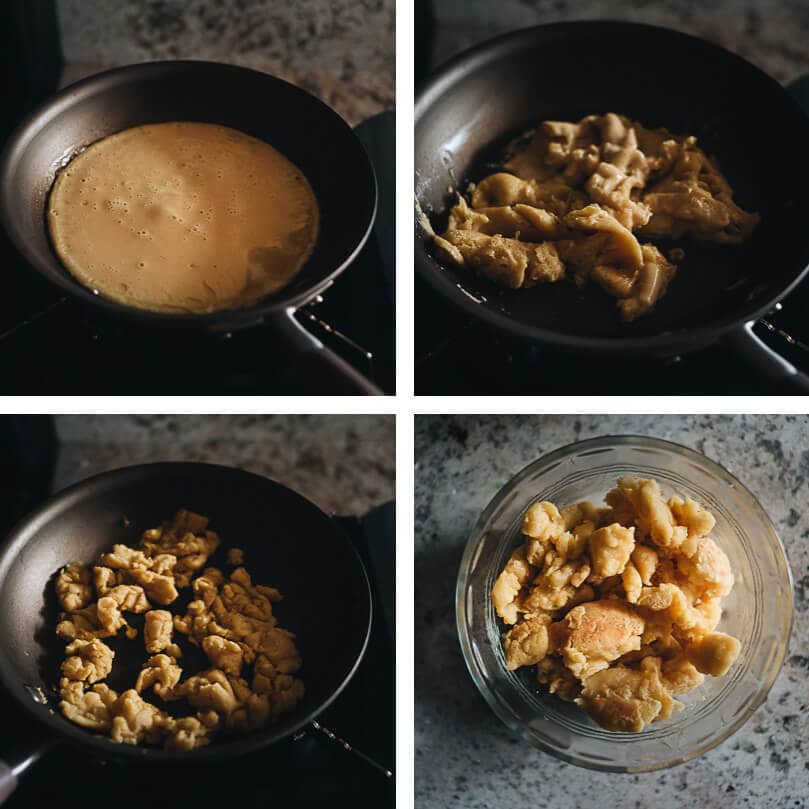
2. Vegan eggs
It’s a fun experiment that I conducted recently and I liked the result. It uses chickpea flour and water to create a runny mixture that’s similar to beaten eggs. Then you use Indian black salt to add a bit of eggy taste. If you’ve never heard of black salt, you can read this post for a more detailed explanation. Basically, the black salt has a sulfuric taste similar to that of a hard-boiled egg yolk. The chickpea egg makes a great alternative to eggs. But even if you use regular salt, the end product will still be tasty and it adds fun texture to the dish. You can skip this step and still make a great vegan Pad Thai. And of course, feel free to use chicken eggs if you’re making a vegetarian dish.
3. What noodles to use
My favorite type is Thai Kitchen Stir-Fry Rice Noodles. It is vegan and gluten-free. The noodles hold their shape well during the stir-fry and taste good even as leftovers. They are quite easy to find. I’ve seen them at Whole Foods and Walmart. Other types of flat rice noodles will work in this dish, too. Note, avoid rice vermicelli, which might look very similar to these rice noodles. It has a different texture and sometimes falls apart easily during stir-frying.
More vegan Asian recipes
Homemade Vegan Dumplings Vegan Dan Dan Noodles Vegan Hot and Sour Soup Chinese Mushroom Stir Fry Vegan Massaman Curry
If you give this recipe a try, let us know! Leave a comment, rate it (once you’ve tried it), and take a picture and tag it @omnivorescookbook on Instagram! I’d love to see what you come up with.