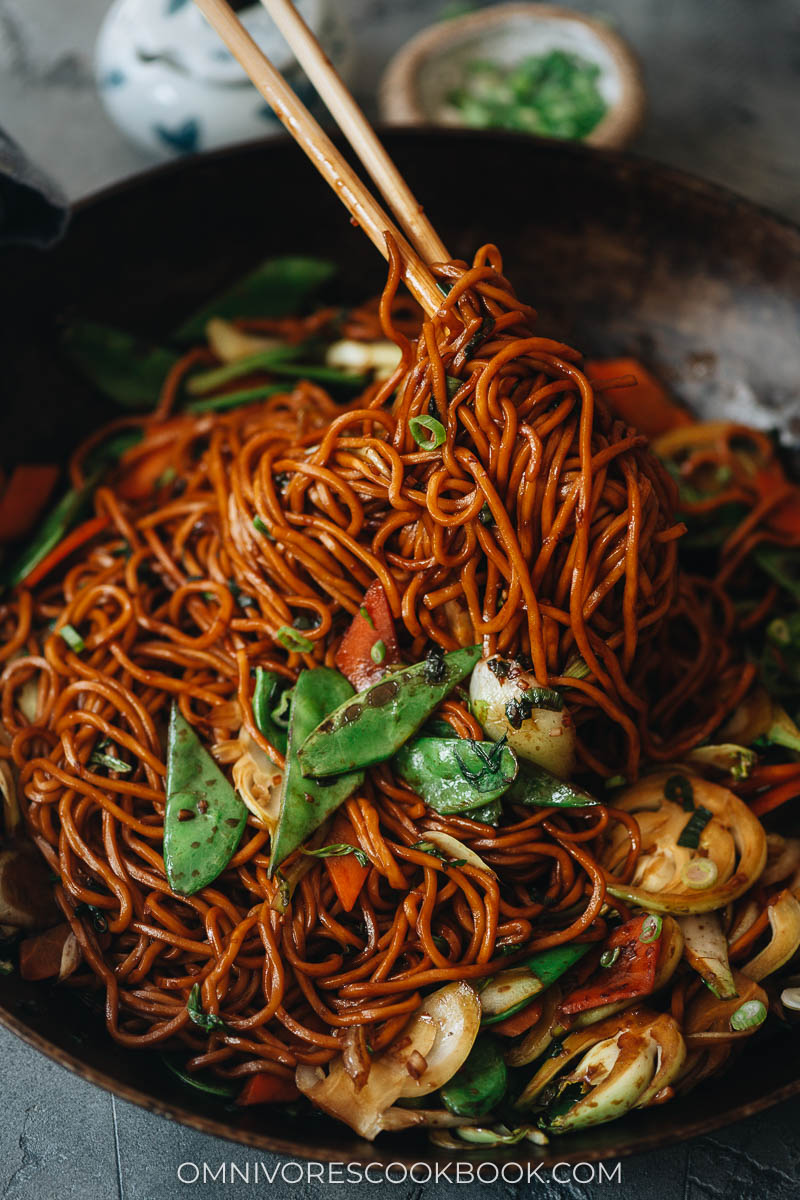
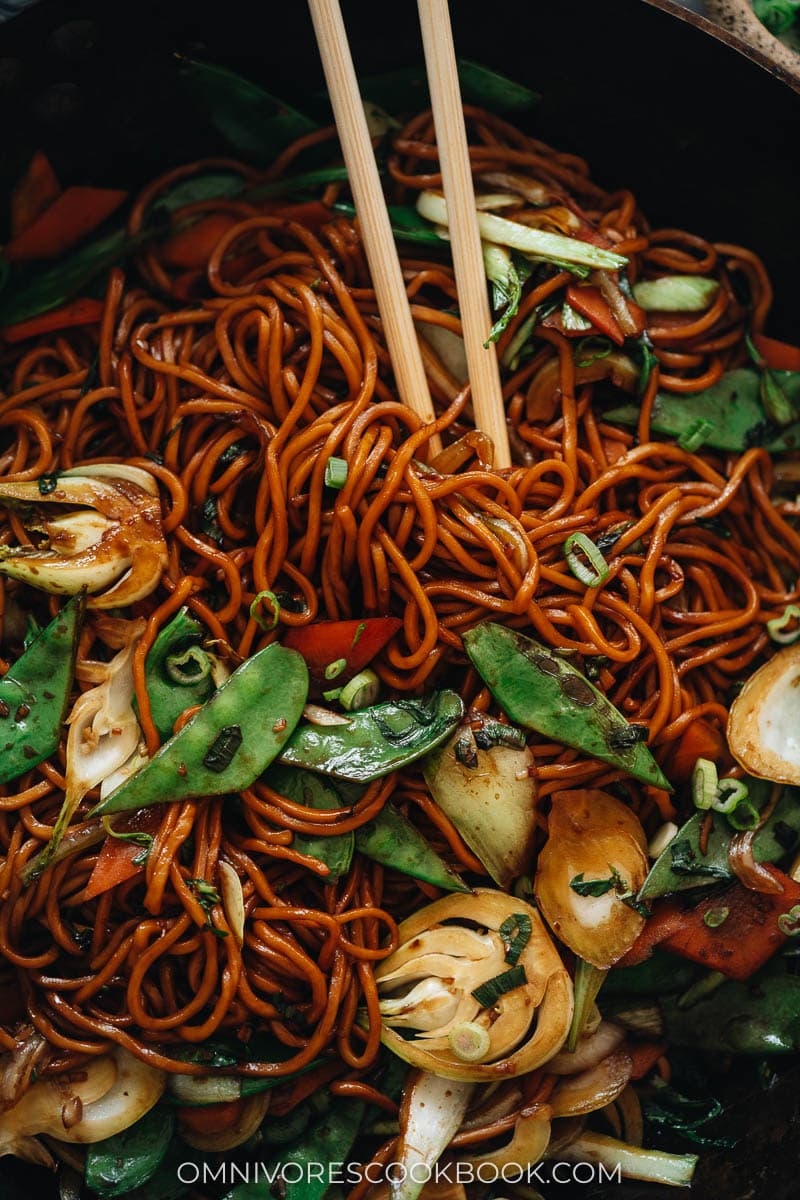
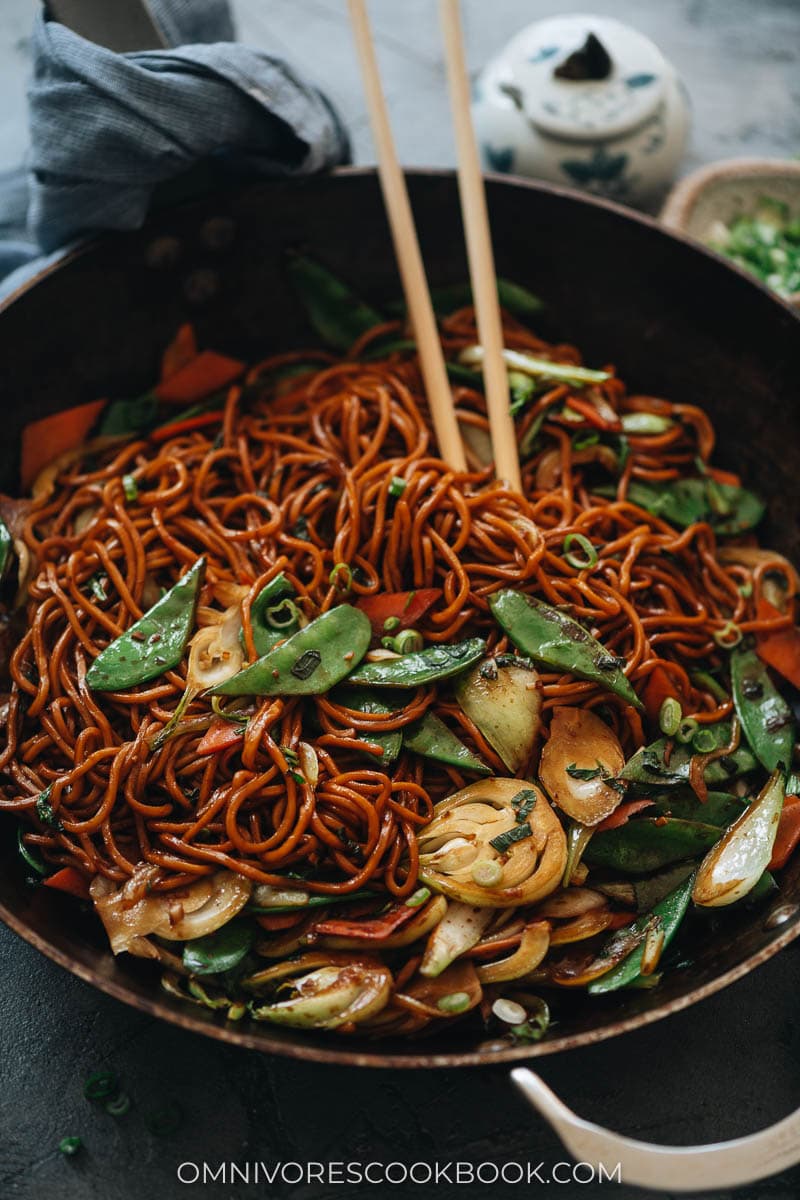
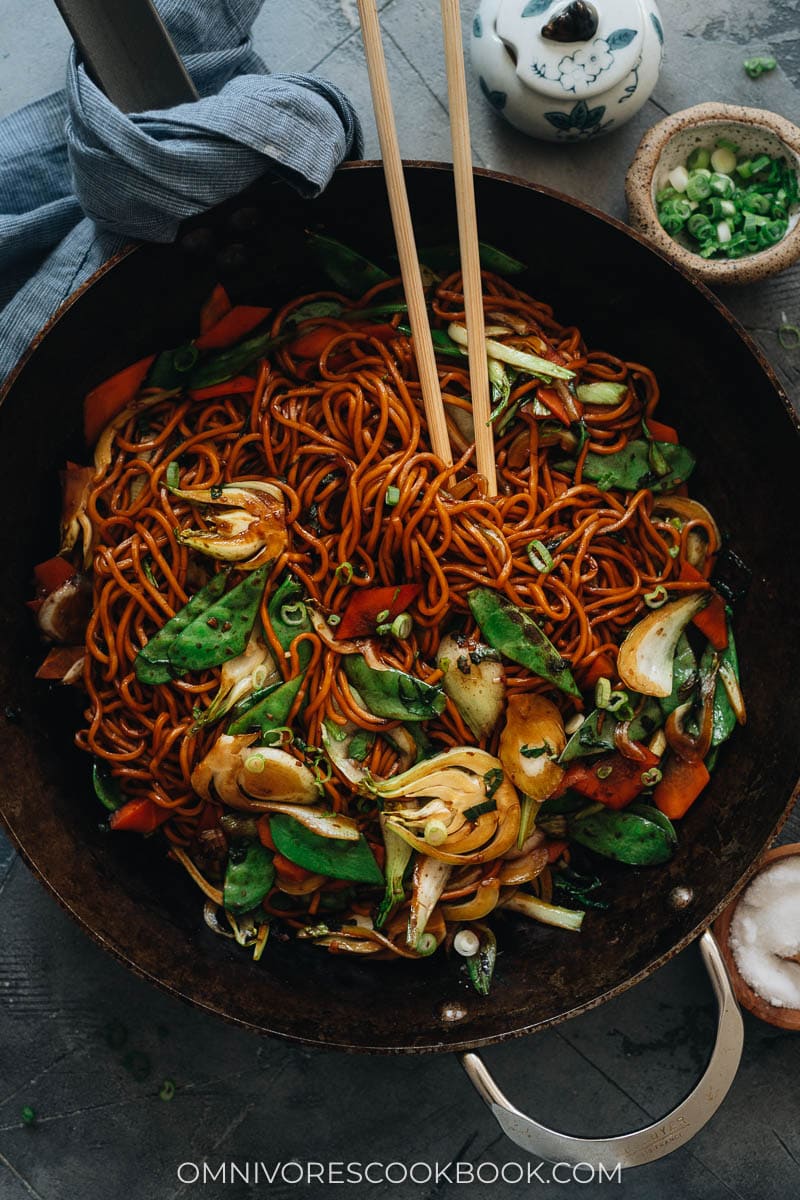
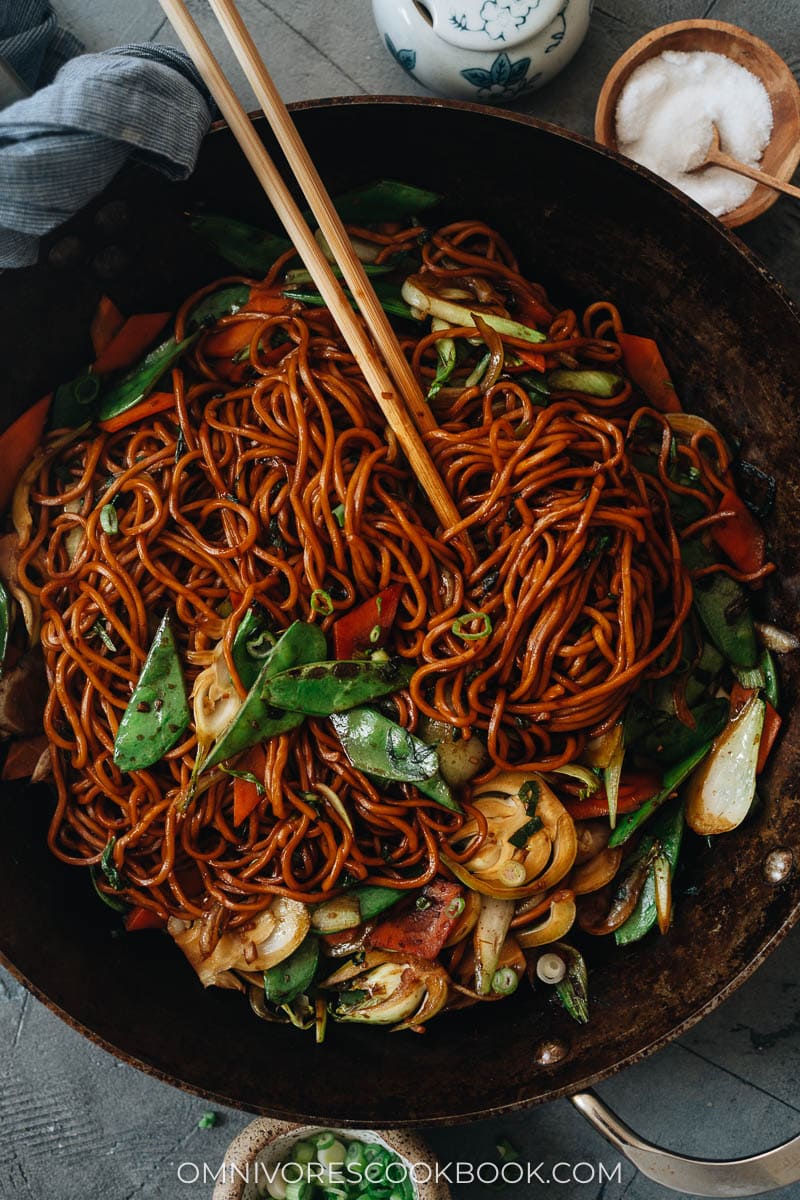
Lo mein might be one of the most popular dishes when it comes to Chinese takeout. Noodles and vegetables unite with a flavorful brown sauce that’s hard to resist. Your local Chinese restaurant likely has a vegetable lo mein option which you probably enjoy. But you’ll love it even more if you make it yourself! Authentic Chinese vegetable lo mein is so easy to make and I promise you, yours will taste even better than takeout.
Why this recipe?
Minimal ingredients, maximum flavor The cooking process is made easy by cutting the veggies into the right shape More veggies create a balanced texture and make the dish healthier It uses much less oil than takeout but retains the great taste
Often, restaurants make big batches of lo mein with very few pieces of vegetables. When you create your own vegetable lo mein, your batch will be smaller and hence, your vegetables will have more firmness and bite to them. My version contains more veggies, so you’ll also get fresher and tastier vegetables in every bite you take. No need to skimp! Most Chinese takeout places use lots of oil, but you won’t need to. My recipe shows you how to keep that great taste with fresh flavor without bogging down the other ingredients.
How to cut vegetables for your lo mein
The key to making the best vegetable lo mein is to ensure that all the veggies are cut so that they cook evenly together and create a good mouthfeel. For example:
Cut snow peas in half, so you won’t bite into big chunks of undercooked peas. Slice carrots into small diamond shapes so they’re consistent with the snow peas. (we used a giant carrot. If you use smaller carrot, simply slice it into round pieces)
A fun way to cut baby bok choy
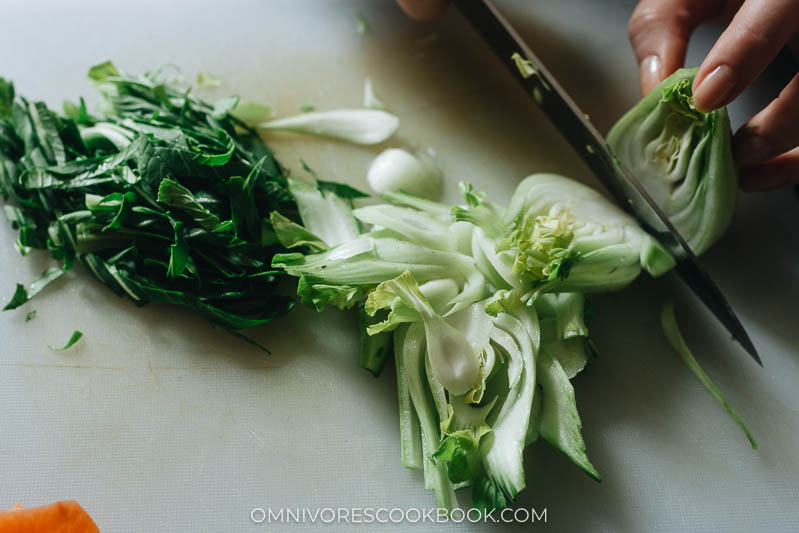
We tried out a new way to cut baby bok choy for the vegetable lo mein and loved the result:
Cut off the leafy part. Slice the green leaves into thin strips. Make the white part stand and slice it into 1/4” (5 mm) pieces lengthwise.
At the end of the cooking, the green part will wither into the noodles, and the white part will stay crunchy and have a beautiful shape.
Ingredients
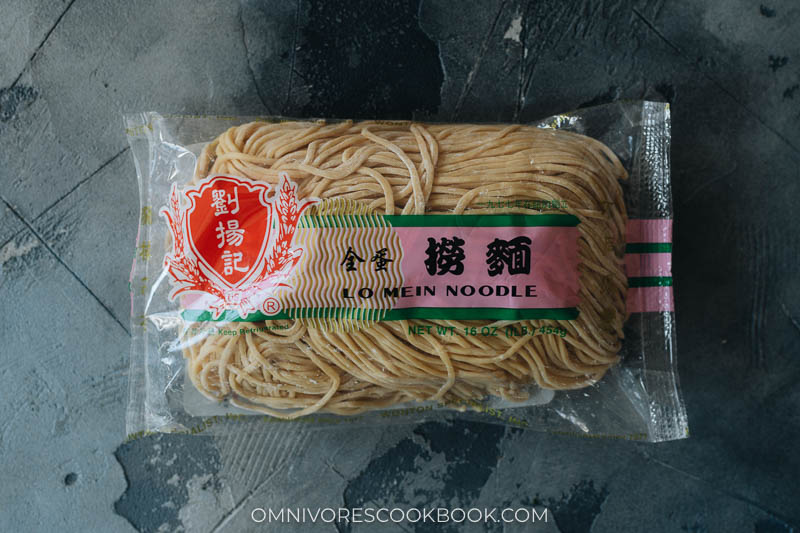
What noodles to use for lo mein
If fresh lo mein noodles are not available, you can also use dried lo mein noodles. I found that dried lo mein noodles are tricky sometimes, because once they are cooked, they turn soft very quickly. If you use dried noodles, I suggest you cook them 1 minute less than the package indicates, so they won’t be overcooked after they’re mixed with noodle sauce. NOTE: Lo mein noodles usually contain eggs. If you want to make your dish vegan, you’ll need to find a wheat noodle that has a similar round, fatty shape.
Dark soy sauce
Dark soy sauce adds a beautiful dark brown color and a hint of caramel taste to your lo mein. If you don’t have dark soy sauce, consider replacing it with 1 tablespoon of oyster sauce. You can use regular soy sauce with a pinch of sugar as an alternative, but the noodles will come out quite lightly colored.
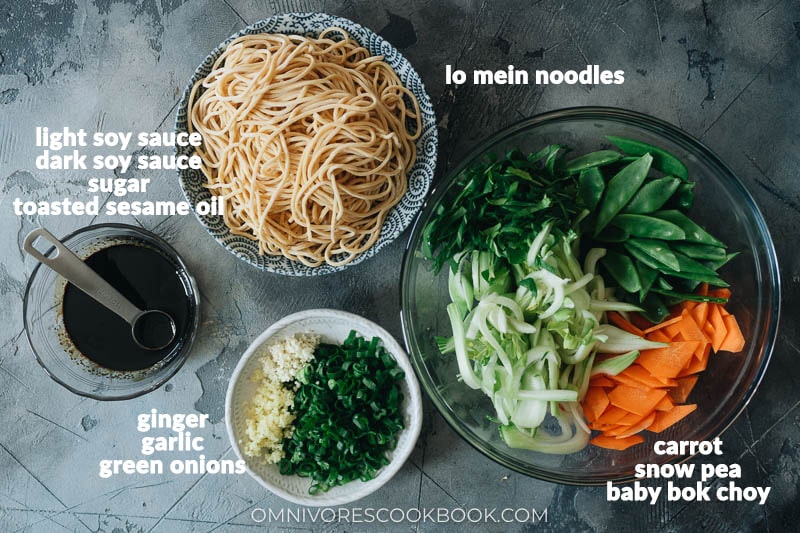
Prep work
When you’re ready to cook, your table should have: NOTE: I used a large bowl for all the veggies and a plate for the aromatics, because we will add them at the same step in the recipe.
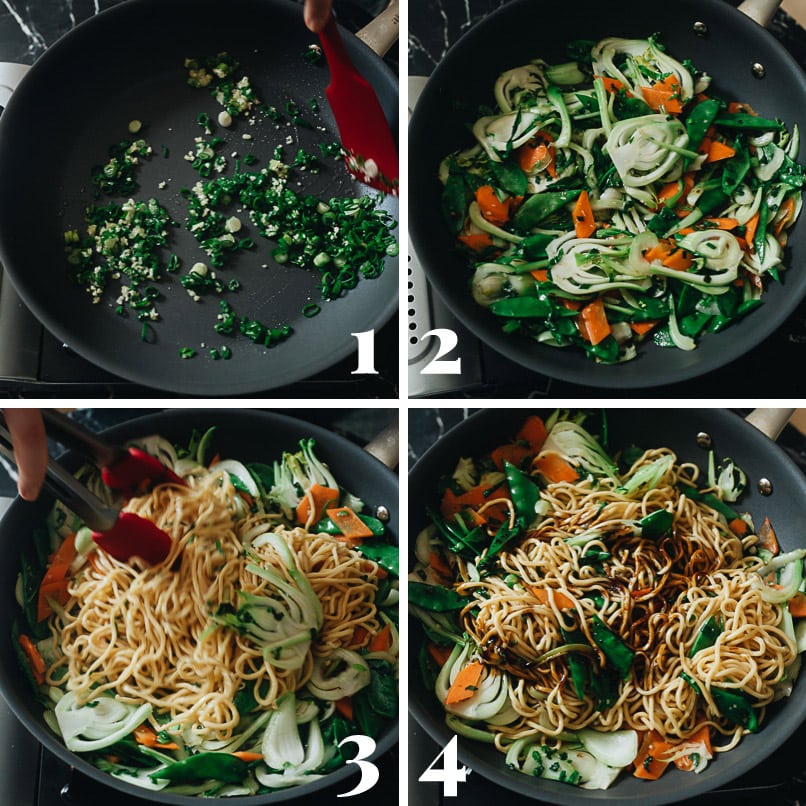
Cooking process
The cooking is unbelievably easy. Once you’ve cooked the noodles, you need to: That’s it! It comes together so quickly that you’ll be done before the takeout delivery driver would even show up at your door. Simply pay attention when you cook the noodles and veggies. You don’t want to overcook those. Pair with your favorite main dish and this vegetable lo mein could become a new weeknight staple in your home!
Main dishes that go with vegetable lo mein
The vegetable lo mein is so satisfying and substantial by itself, that it’d be totally proper to serve it as a main dish. On the other hand, it’s so easy and fast to make and totally works as a side dish. Pair it with the easy mains below to create a scrumptious meal!
Ginger Chicken Stir Fry Char Siu (Chinese BBQ Pork) Sweet and Sour Chicken (Without Deep-Frying) General Tso’s Tofu Real-Deal Szechuan Beef Stir Fry Real-Deal Soy Sauce Chicken
Want to learn more about Chinese Cooking? Sign up my newsletter to receive the 5-Day Chinese Cooking Crashing Course and recipe update! If you give this recipe a try, let us know! Leave a comment, rate it (once you’ve tried it), and take a picture and tag it @omnivorescookbook on Instagram! I’d love to see what you come up with.
More delicious noodle recipes
Char Siu Chow Mein Easy Fried Udon (Yaki Udon) Thai Peanut Butter Ramen 15-Minute Chicken Chow Fun (Chicken Fried Rice Noodles) Easy Singapore Noodles
Lilja Walter is a part of the Omnivore’s Cookbook team and worked closely with Maggie to develop and test this recipe.