Why Make Vegetarian Kimbap
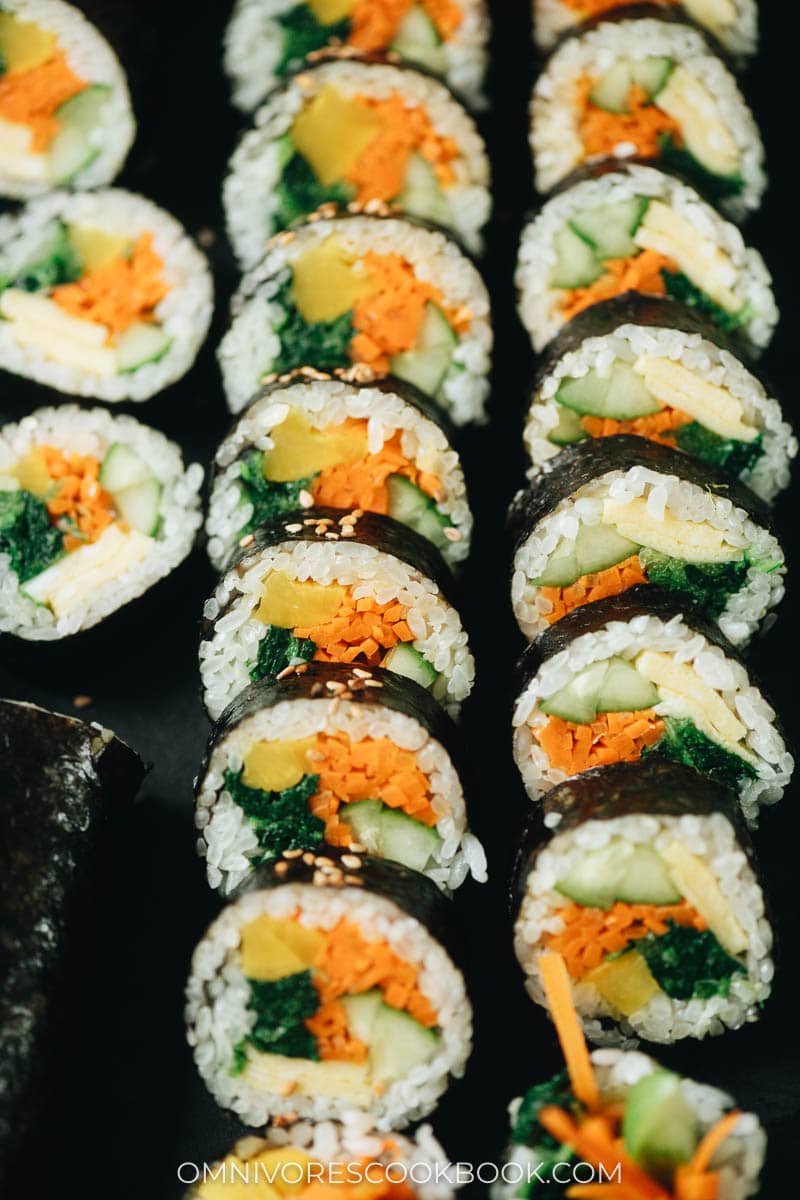
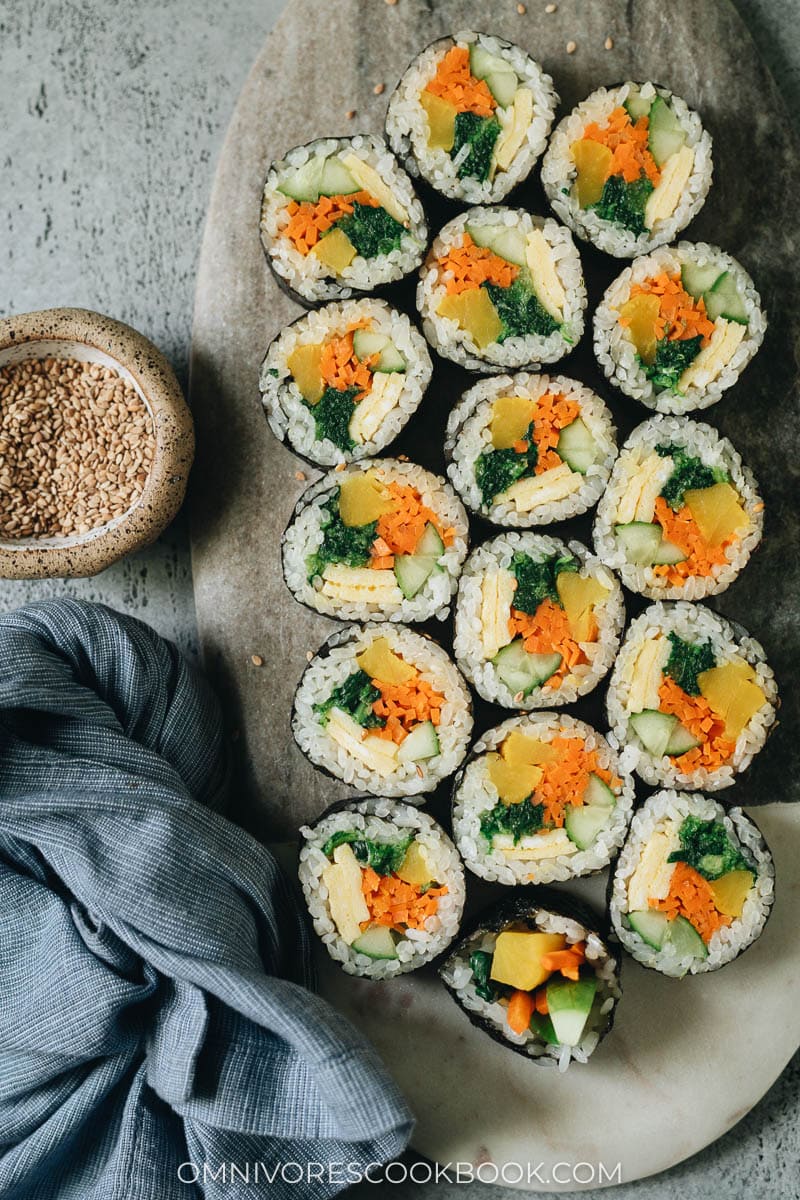
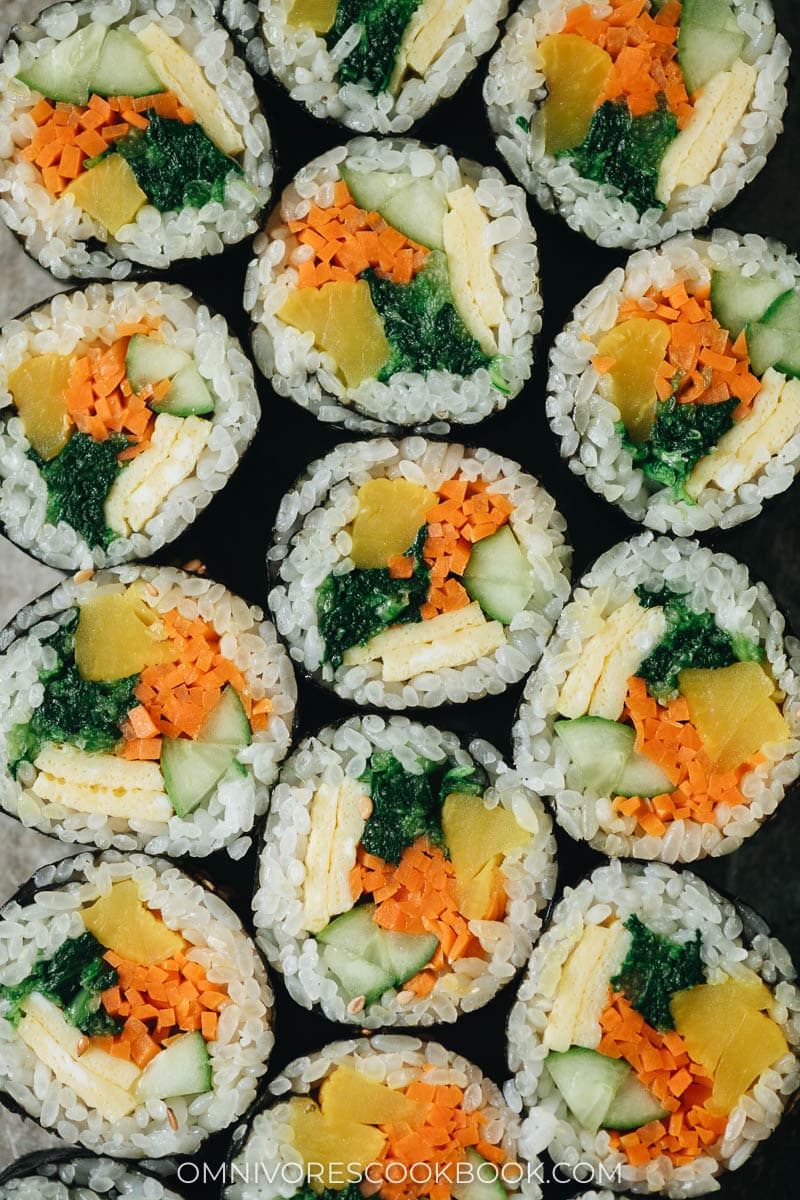
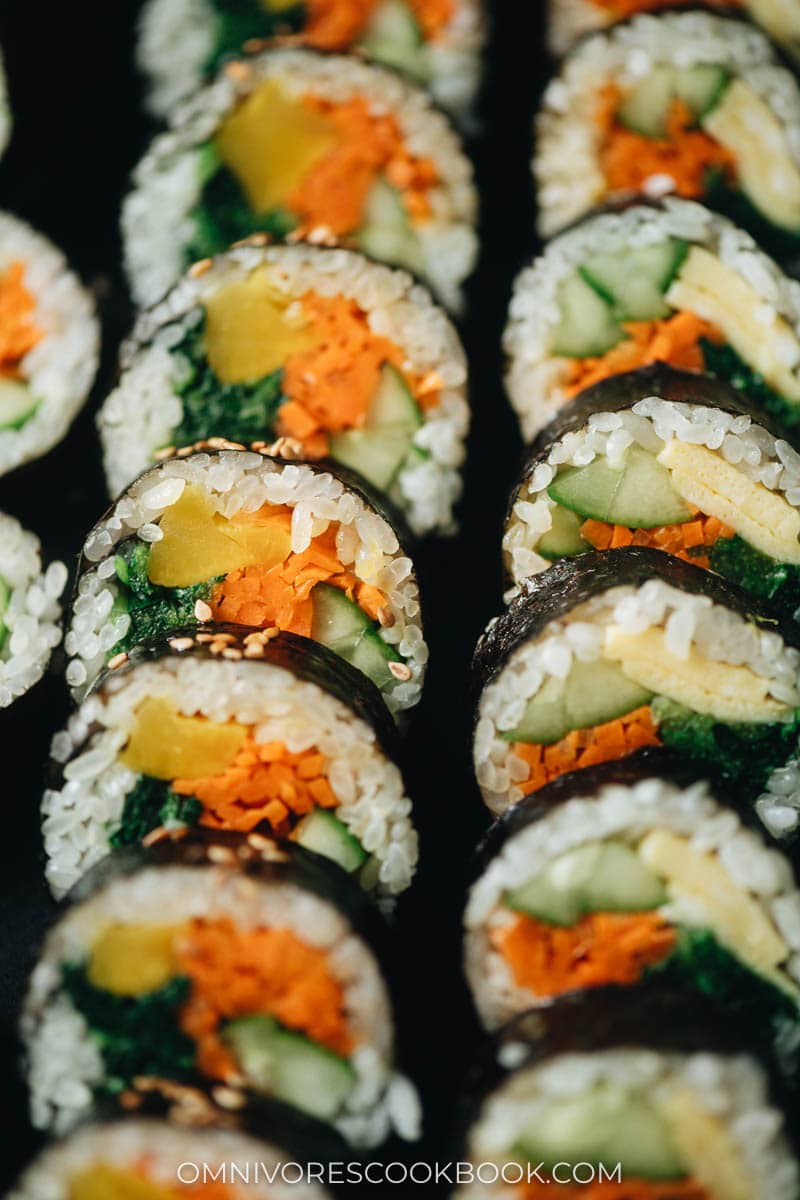
Every time I visit the Asian grocery store I’m tempted by the ready-made vegetarian kimbap. It’s so much fun to eat and I frequently pick up a pack to bring home. I love the contrasts between the different textures, from the snap of the nori seaweed, the perfect tender rice, creamy egg, and the distinctive crunches of the various veggies. Flavor-wise, the umami of the seaweed is lovely against the mild fragrance of the different veggies. And the Korean pickled radish (danmuji) has a delightful sweet-sour-salty character that shines through everything. It’s almost like a salad in (“sushi”) roll format: there’s a lot of veggies and a bit of rice and egg. So it’s nicely balanced in terms of nutrition. So it’s fun to eat, delicious, nutritionally balanced – what’s not to love?
Tips on How to Make Vegetarian Kimbap
Prepare the Ingredients Separately
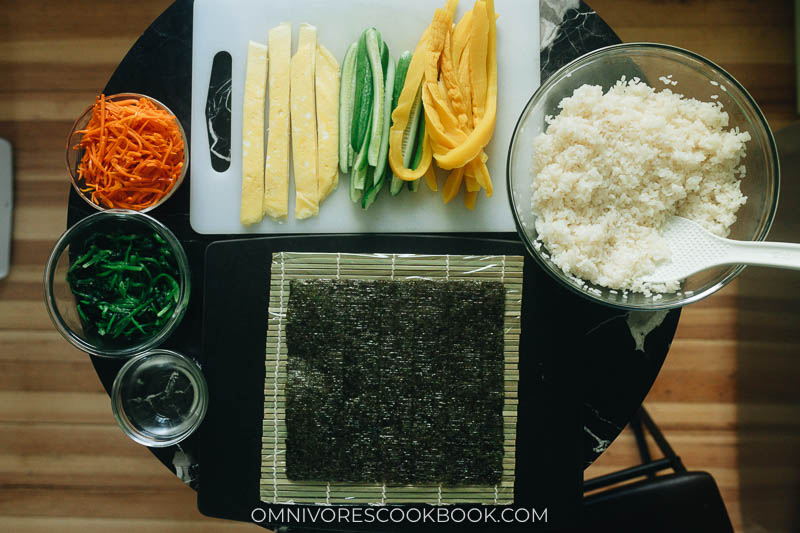
It might be tempting to try to cook as much of the ingredients at the same time as you can, but resist the urge! You’ll want to cook the spinach and carrot individually, so that you can get them to the perfect level of doneness. If you’re going to cook some of the ingredients in parallel, it helps to have a friend in the kitchen to help.
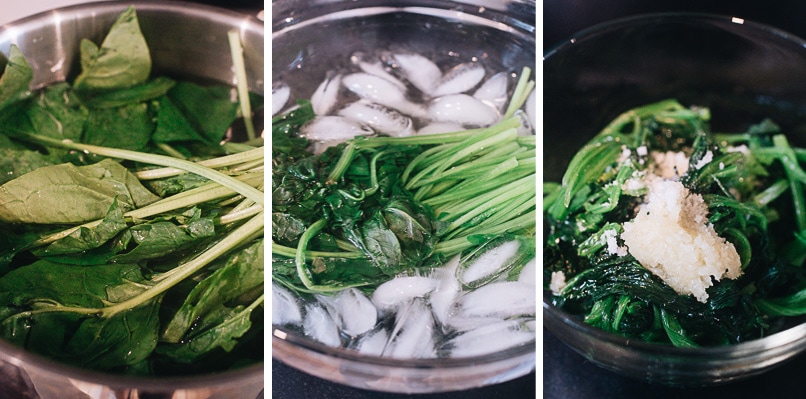
Blanch and Ice the Spinach
The spinach should be blanched very lightly – no more than 30 seconds – and you want it to have a vibrant green color. Submerging it in the ice bath after cooking will help preserve the perfect degree of color and flavor.
Gently Saute the Carrots
You’ll shred and saute the carrots in oil until they start to turn limp, yet still bright orange and with some of the crunch left. Keep the heat on the lower side so that the carrots do not blister or caramelize.
The Ingredients are Flexible
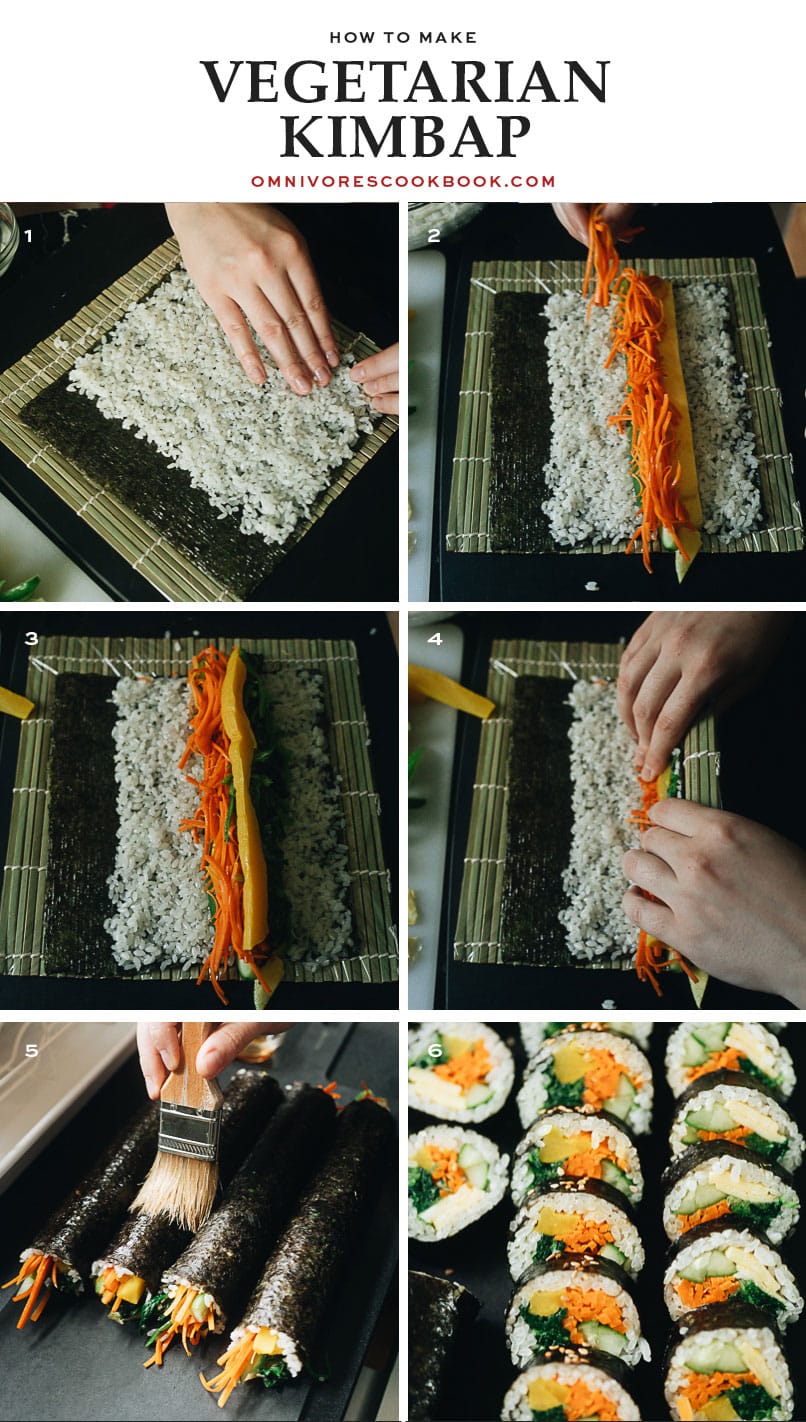
If you’ve got some other veggies on hand or just prefer to use others than I’ve prescribed here, by all means, customize your vegetarian kimbap! For the best experience, though, you’ll want to use ingredients that have a variety of colors and textures. Some of the satisfaction of the dish comes just from the beautiful appearance of the inside of the roll, with its mini-rainbow palette, and texture will ensure it’s a ton of fun to eat. See the footnotes in the recipe below for tips on other veggies (and non-veggies) you can add.
Don’t Skip the Danmuji!
There is some flexibility as to what veggies you put in the kimbap. But you really should not skip or replace the Korean pickled radish, aka danmuji. Danmuji is a bright yellow pickled daikon radish. And you’ll typically find it in the refrigerated section of the Asian grocery store. You can buy it in both cut and whole forms; I like to buy the whole one so I can cut it to the size and shape that I like.
Cook the Egg Until Fully Set
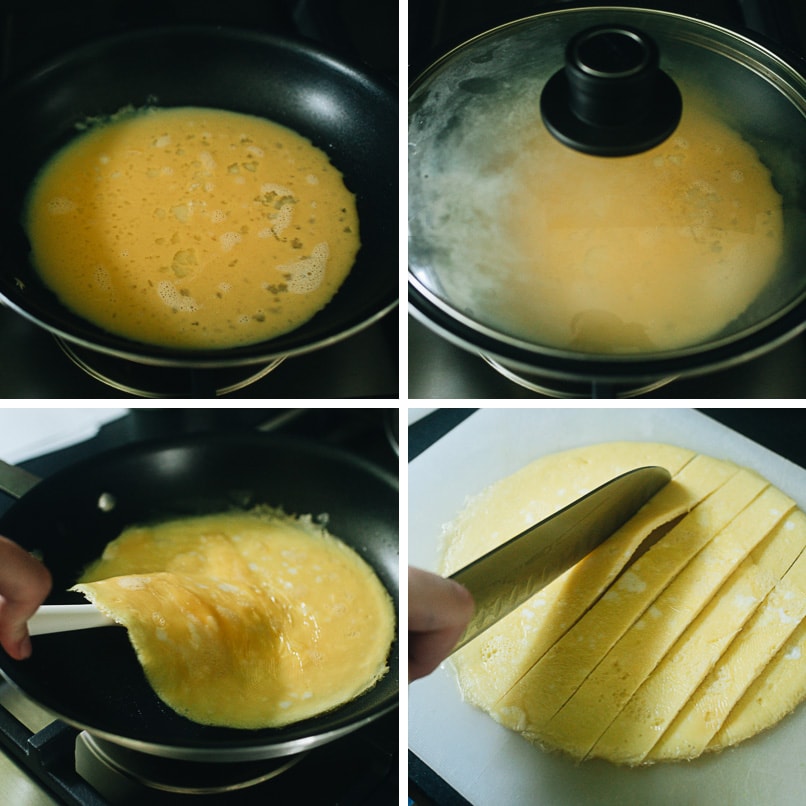
While I do love a runny egg in all sorts of scenarios, I should emphasize that the egg for the vegetarian kimbap should be cooked all the way through. You don’t want the heat so high that it crisps the edges; the cooked egg should still be quite tender and a nice pale yellow color.
Use Sushi Rice if You Can
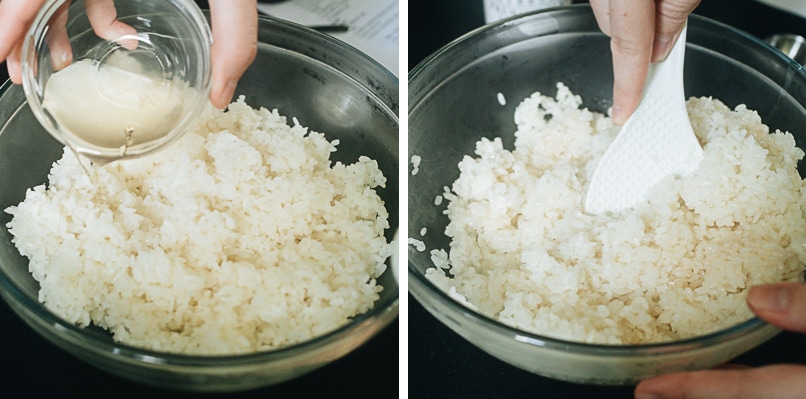
Traditional kimbap doesn’t use sushi rice explicitly. But I find that it adds another layer of subtle complexity to the flavor of the kimbap, and the texture is quite nice too. And it somehow elevates the flavors of the seaweed, pickled radish, and other goodies. By “sushi rice”, I do mean that you should use polished short grain rice from Asia (the package may or may not say “sushi rice” on it. But you should also prepare the rice the way you would for sushi, by adding a mixture of rice vinegar, salt, and sugar.
Tips for Serving and Storing Vegetarian Kimbap
Serve Vegetarian Kimbap at Parties
This kimbap is great for parties since you can easily pick up the seaweed-wrapped pieces with your hands and eat them. They’re acceptable both as finger food and eaten with chopsticks. It doesn’t typically need a dipping sauce, but you have the option of enjoying it with one, such as some combination of soy sauce, vinegar, hot sauce, and/or sesame oil.
Pack it For Picnics
Since it doesn’t need to be refrigerated, vegetarian kimbap is a perfect item to bring on a picnic. Just bag it up or wrap it in plastic wrap and keep it relatively cool and out of the sun until you’re ready to eat it. I don’t recommend making this a day in advance, though, since the texture of the seaweed is best when you enjoy the kimbap within 8 hours or so of being made.
Eat the Kimbap Within a Day in Any Case
However you plan to serve the vegetarian kimbap, keep in mind that you don’t want to have it around for more than 24 hours if you can help it. It will still be edible, of course, but the nori seaweed will get slightly soggy (it just absorbs moisture from the air) and the perfect texture will diminish. Putting the kimbap in the fridge will also affect the seaweed, so don’t refrigerate it unless you absolutely have to.
More Korean-Inspired Classics
Kimchi Fried RiceSundubu Jjigae (Soft Tofu Stew)Galbi-Style Marinated SteakSeafood Pancake (Haemul Pajeon)
Lilja Walter is a part of the Omnivore’s Cookbook team and worked closely with Maggie to develop and test this recipe.