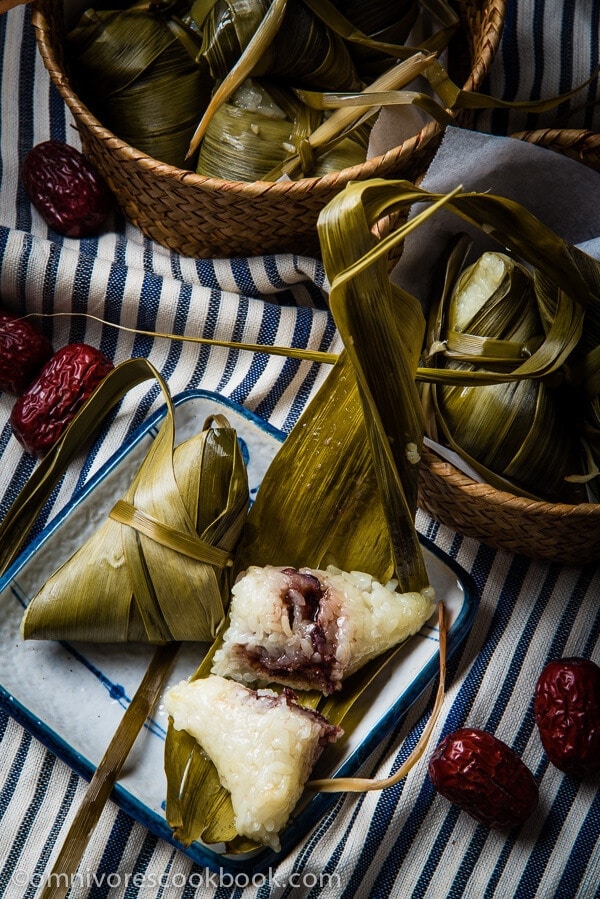
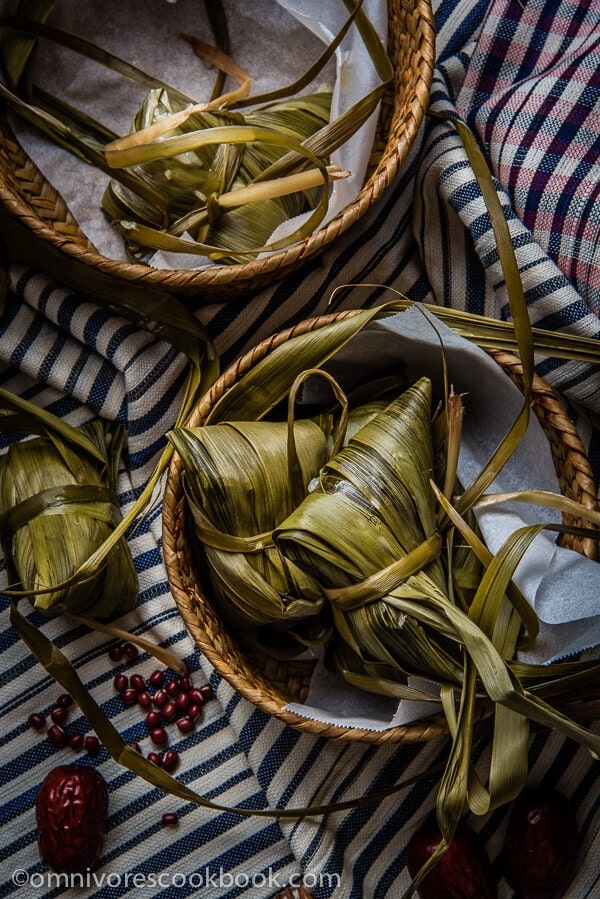
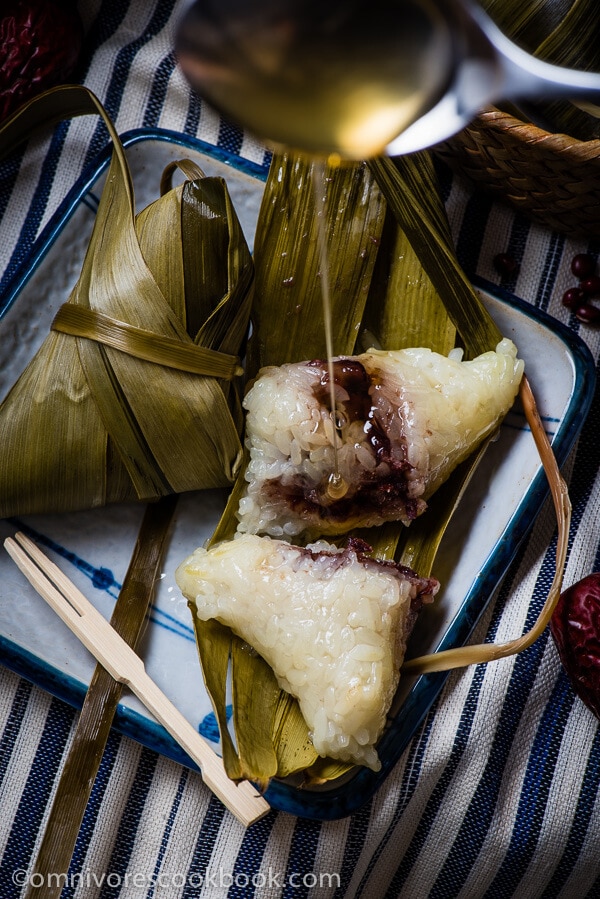
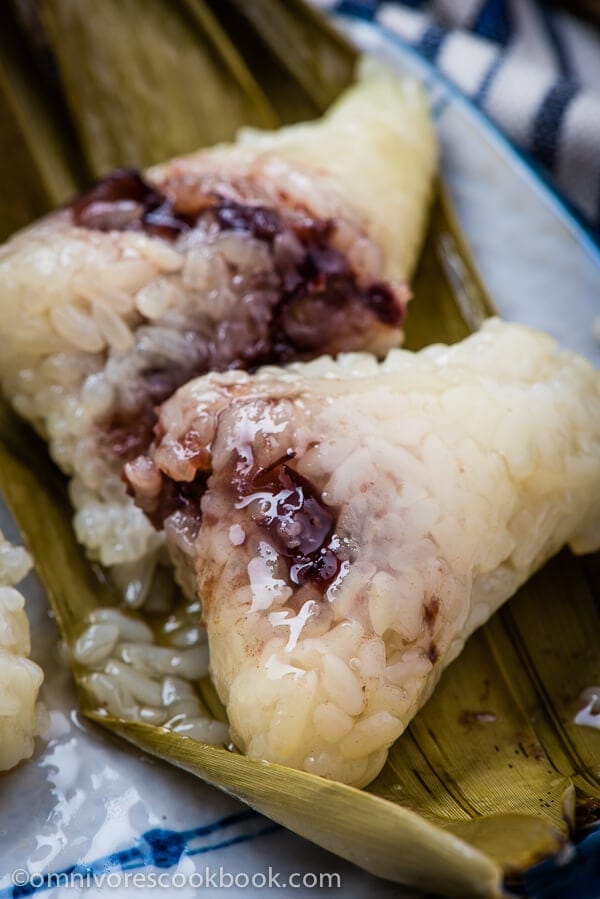
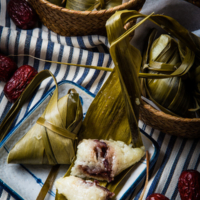
These sweet rice dumplings are gooey, sweet, and infused with the nice grassy aroma of the bamboo leaves. Learn the traditional Chinese cooking method in minutes with the video and step-by-step pictures. In this post you can find: What is a zongzi? The backstory Cooking Notes Cooking Video Recipe I never thought about sharing a zongzi recipe until a reader brought it up. It uses very few, but quite unique, ingredients that might not be very easy to find outside of China. Plus, it’s the type of traditional Chinese food that most fast-paced families don’t cook at home. They buy frozen ones instead, just as they do for other types of dumplings and buns. My mood was brightened by cooking zongzi last week. The room was filled with the sweet aroma of the sticky rice and the refreshing smell of the leaves. It was like the nice air at a lotus pond shortly after the rain. It reminded me of the running river and the blooming flowers. The fragrance gave me great peace of mind. I was so happy about my decision to cook zongzi (Thanks so much, Kara!). However, the zongzi wrapping process was quite a dramatic one. Before rambling about my miserable cooking failure, I’ll give you a short introduction to zongzi first.
What is a zongzi?
Zongzi (粽子), or sticky rice dumpling, is a traditional Chinese dessert eaten to celebrate the Dragon Boat Festival (5th day of the 5th month of the lunar calendar). The idea of the zongzi is similar to that of tamales. The sticky rice is wrapped with all kinds of fillings in a wrapper (usually bamboo, reed, or banana leaves) and then boiled or steamed. It’s a comforting snack loved by a lot of people. There are so many types of zongzi, that it is difficult to cover them all in a short post like this. Generally speaking, there are sweet and savory zongzi. The sweet zongzi can be filled with red bean paste, marinated or dried jujubes, or marinated fruits. The savory zongzi are filled salted or chashu pork, salted egg, fish, chicken, mushrooms, or beans. Just like for dumpling fillings, there are countless combinations. For northerners, we usually cook sweet zongzi instead of savory ones.
The backstory
First of all, I need to give full credit for the recipe to my mom. Thanks to her, I was able to put the recipe together. I’d mess up everything without her help. My trouble originated from the pride and prejudices of a northerner. When I mentioned that I needed to purchase some bamboo leaves online to cook this dish, my mom suggested we get some fresh leaves from my grandma’s place. She cooks zongzi throughout the year and often enjoys them as a staple. She always has zongzi wrappers on hand. When I looked at the leaves, I was surprised at how narrow and tiny they were. “It is impossible to make zongzi out of these!” I claimed. They were reed leaves that a relative gathered by hand and shipped from their northern hometown. Very special and with a great aroma, but not really the bamboo ones I was expecting. However, my grandma insisted I HAD TO use the reed leaves. To quote her original words – The bamboo leaves suck and don’t have a nice aroma. We northerners only use reed leaves and that is the only way to cook good zongzi. She just officially banned me from using any other type of leaves! But how do I make zongzi from these tiny leaves? She told me it’s easy. Just overlap three leaves together and wrap. In the end, I brought the leaves home without feeling very confident. So I decided to ask for my mom’s help (very smart of me!). We both had the experience of wrapping zongzi, from around 10 years old. So we guessed (read: hoped) the zongzi wrapping muscles were still there. It turns out, wrapping zongzi with three leaves at a time is pretty damn difficult! After trying for 30 minutes without success, I turned to my mom and said I’d give her full credit for making this one, and that I’d care of the video shooting. The wrapping wasn’t even easy for her, although she claims she has a gift for wrapping things. Fortunately, we managed to wrap all the zongzi in the end.
Cooking Notes
Don’t be intimidated by folding with three leaves. If you are using bamboo or banana leaves, you only need to work with one at a time. Boil the leaves for a few minutes so they won’t break during the wrapping. But don’t boil them for too long, otherwise they will lose their nice aroma. Marinate the sticky rice overnight or longer, so it will be cooked through easier. Wrap the zongzi carefully so the rice won’t fall out during cooking. If you are using more than one leaf at a time, dip the leaves in water before wrapping. The water on the leaves will help them stay together. Don’t tie the zongzi too tightly, because the rice will expand during cooking and end up with a funny shape. Place a heavy plate on top of the zongzi during cooking, so they will stay under water and keep their shape. It generally takes 3 hours to cook through a medium sized zongzi by boiling. You can cook for two and half hours if the zongzi is smaller, or up to 4 hours if the zongzi is huge. You can double or triple this recipe easily.
Cooking Video
Here is the video on how to make zongzi. Don’t forget to check out my YouTube channel too. I have a collection of cooking videos that walk you through the delicious recipes at Omnivore’s Cookbook. It is one of the fastest ways for you to get used to the techniques that are used in Chinese cooking!